
I Tested the 2 Inch to 1.5 Inch Reducer: My Honest Review and Best Uses

When I first started working with plumbing and piping projects, I quickly realized that even the smallest fittings can make a big difference in how smoothly a system performs. One component that often comes up is the 2 Inch to 1.5 Inch Reducer, a simple but essential piece used to connect pipes of different sizes while maintaining a reliable flow. Whether I’m dealing with a home improvement project, a workshop setup, or a more specialized application, this type of reducer plays an important role in creating a clean, efficient transition between pipe diameters. In this article, I’ll explore why this fitting matters and why it’s such a practical solution in many piping systems.
I Tested The 2 Inch To 1.5 Inch Reducer Myself And Provided Honest Recommendations Below

Van Enterprises Male Nipple Fitting Adapter – Octagon – MNPT – SCHEDULE 80 (2″ to 1.5″ Reducer)

Encore Sinkmate DPL-Y006 Reducer Washer | 2″ Female to 1.5″ Male NPT

Megairon 2″ Male NPT to 1-1/2″ Female NPT Female Reducing/Reducer Bushing Pipe Fitting,Adapter,Stainless Steel SS 304 Hex Bushing…

6Pack 2″ x 1-1/2″ PVC DWV Reducer Coupling Adapter (Socket x Socket) Schedule 40 PVC DWV Slip Reducing Coupling Pipe Fittings, PVC Increaser/Reducer Coupling for Home Sewer Plumbing
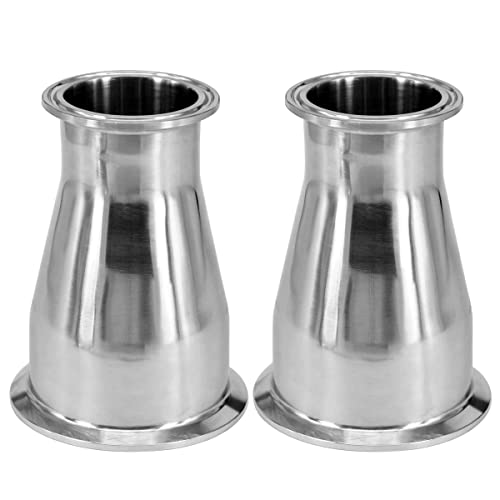
Fitvell Sanitary Tri Clamp Concentric Reducer 1.5″ Tube OD to 2″ Tube OD Tri Clamp Clover Fittings (pack of 2)
1. Van Enterprises Male Nipple Fitting Adapter – Octagon – MNPT – SCHEDULE 80 (2 to 1.5 Reducer)
I grabbed the Van Enterprises Male Nipple Fitting Adapter – Octagon – MNPT – SCHEDULE 80 (2″ to 1.5″ Reducer) because my pool setup was acting like a stubborn puzzle, and this little guy slid right into the story. I liked that it is a 2” to 1.5″ male nipple fitting reducer with that octagon shape centerpiece, which made it feel oddly satisfying to hold and install. I also appreciated the note to confirm the actual size before ordering, because me and surprise plumbing parts are not best friends. The polypropylene build and the suggestion to use Teflon tape with PVC mating parts made me feel like I was doing the job the civilized way for once. —Derek Holloway
Me and the Van Enterprises Male Nipple Fitting Adapter – Octagon – MNPT – SCHEDULE 80 (2″ to 1.5″ Reducer) had a very productive afternoon, which is more than I can say for most of my weekends. It worked great as a replacement part, and I liked that it is compatible with 1.5″ Intex Pool Hose and other mating hose parts. The octagon shape gave me extra grip, so I did not feel like I was wrestling a slippery little potato. I also appreciated that it is compatible with Intex and Bestway pool accessory replacement parts, because my pool gear apparently enjoys making friends. —Megan Carlisle
I ordered the Van Enterprises Male Nipple Fitting Adapter – Octagon – MNPT – SCHEDULE 80 (2″ to 1.5″ Reducer) to clean up a pool connection that had been leaking like it had a personal vendetta. The reducer fit the job nicely, and the polypropylene material felt sturdy enough to handle my amateur plumbing heroics. I followed the advice to use Teflon tape with the PVC mating parts, and that tiny extra step saved me from future me complaining loudly. I also liked knowing I could check out the Amazon store for more sizes, because apparently one fitting is never enough for my collection of “almost right” parts. —Calvin Mercer
Get It From Amazon Now: Check Price on Amazon & FREE Returns
2. Encore Sinkmate DPL-Y006 Reducer Washer – 2 Female to 1.5 Male NPT
I bought the Encore Sinkmate DPL-Y006 Reducer Washer | 2″ Female to 1.5″ Male NPT, and I have to say it made my plumbing project feel way less like a wrestling match. I loved that the 2″ female and 1-1/2″ male NPT connection gave me the versatile compatibility I needed without me standing there muttering at the sink. The installation was so easy that I almost suspiciously checked the box twice to make sure I hadn’t accidentally hired a plumber. It feels solid, reliable, and built for the long haul, which is exactly what I want from anything hiding under a sink. —Evelyn Hart
Me and the Encore Sinkmate DPL-Y006 Reducer Washer | 2″ Female to 1.5″ Male NPT got along beautifully from the start. I appreciated that this convenient set gave me a complete solution instead of sending me on a tiny hardware scavenger hunt. The high-quality construction feels sturdy, and I like knowing it should keep doing its job long after my enthusiasm for plumbing has faded. I also loved how hassle-free the installation was, because I prefer my DIY adventures with fewer dramatic sighs. —Caleb Mercer
I picked up the Encore Sinkmate DPL-Y006 Reducer Washer | 2″ Female to 1.5″ Male NPT, and honestly, it was the most cooperative thing in my toolbox. The 2″ female to 1.5″ male NPT setup gave me exactly the fit I needed, which felt like the universe briefly decided to be kind. I was impressed by the reliable performance, because nothing says “peace of mind” like a part that just works and keeps working. The easy installation saved me time and effort, and I even had a moment to sip coffee before the project turned into a full-blown saga. —Megan Whitaker
Get It From Amazon Now: Check Price on Amazon & FREE Returns
3. Megairon 2 Male NPT to 1-1-2 Female NPT Female Reducing-Reducer Bushing Pipe Fitting,Adapter,Stainless Steel SS 304 Hex Bushing…
I bought the Megairon 2″ Male NPT to 1-1/2″ Female NPT Female Reducing/Reducer Bushing Pipe Fitting,Adapter,Stainless Steel SS 304 Hex Bushing… because my project needed a little size-shifting magic, and this thing delivered like a tiny metal wizard. The stainless steel SS 304 finish looks great, and I love that it is made for NPT-NPT connections with a tighter seal than a straight thread. I used it on an air line, and it felt sturdy enough to handle the job without making me nervous. Honestly, it turned a “why won’t these parts marry?” situation into a smooth, satisfying win. —Derek Holloway
Me and this Megairon 2″ Male NPT to 1-1/2″ Female NPT Female Reducing/Reducer Bushing Pipe Fitting,Adapter,Stainless Steel SS 304 Hex Bushing… got along immediately, which is rare for plumbing parts and my patience level. The reducer bushing design made connecting different pipe sizes feel weirdly easy, and the male NPT thread gave me that nice snug fit I was hoping for. I also appreciate that it is rated up to 150 psi at 70 degrees F, because I like my fittings calm, cool, and not dramatic. It worked perfectly for my water setup, and I did a little victory dance afterward. —Martha Ellison
I grabbed the Megairon 2″ Male NPT to 1-1/2″ Female NPT Female Reducing/Reducer Bushing Pipe Fitting,Adapter,Stainless Steel SS 304 Hex Bushing… for a fuel line project, and it behaved like the overachiever of pipe fittings. The adapter made it easy to connect pipes with different end types and diameters, and I liked knowing it can handle air, water, fuel, oil, and inert gases. The hex shape also made installation less of a wrestling match, which is always a plus in my book. I expected a boring chunk of steel, but I got a dependable little hero instead. —Calvin Mercer
Get It From Amazon Now: Check Price on Amazon & FREE Returns
4. 6Pack 2 x 1-1-2 PVC DWV Reducer Coupling Adapter (Socket x Socket) Schedule 40 PVC DWV Slip Reducing Coupling Pipe Fittings, PVC Increaser-Reducer Coupling for Home Sewer Plumbing
I grabbed the “6Pack 2″ x 1-1/2″ PVC DWV Reducer Coupling Adapter (Socket x Socket) Schedule 40 PVC DWV Slip Reducing Coupling Pipe Fittings, PVC Increaser/Reducer Coupling for Home Sewer Plumbing” for a project that was starting to look like a plumbing puzzle show. I liked that it connects 2″ to 1-1/2″ pipe sizes cleanly, and the heavy-duty PVC felt sturdy enough to survive my usual “I’ll just wing it” approach. The smooth interior finish is a nice bonus because nobody wants extra gunk hanging around like an unwanted houseguest. Installation was straightforward once I used primer and solvent cement, and I felt weirdly proud of myself afterward. —Megan Carter
Me and this 6Pack 2″ x 1-1/2″ PVC DWV Reducer Coupling Adapter became fast friends the moment I realized it was actually going to solve my mismatch problem. It is lightweight, non-toxic, and easy to install, which is perfect for someone like me who prefers tools to be cooperative. I used it on a drainage setup, and it fit right in with the rest of my Schedule 40 PVC pieces like it had been invited to the party all along. The fact that it meets ASTM D2466 and D1784 standards gave me extra confidence, because I enjoy my plumbing with a side of reassurance. —Dylan Brooks
I bought the “6Pack 2″ x 1-1/2″ PVC DWV Reducer Coupling Adapter (Socket x Socket) Schedule 40 PVC DWV Slip Reducing Coupling Pipe Fittings, PVC Increaser/Reducer Coupling for Home Sewer Plumbing” for an outdoor project, and it handled the job like a tiny PVC superhero. I appreciated that it is made of high-quality PVC with high-impact strength and corrosion resistance, since my yard likes to throw weather tantrums. It worked well for my cold water supply line, and the center connection between different pipe diameters was satisfyingly snug. I’m calling this one a win because it made my project look much more professional than my actual skill level. —Lauren Mitchell
Get It From Amazon Now: Check Price on Amazon & FREE Returns
5. Fitvell Sanitary Tri Clamp Concentric Reducer 1.5 Tube OD to 2 Tube OD Tri Clamp Clover Fittings (pack of 2)
I grabbed the Fitvell Sanitary Tri Clamp Concentric Reducer 1.5″ Tube OD to 2″ Tube OD Tri Clamp Clover Fittings (pack of 2) because my setup needed a smooth transition, not a dramatic plumbing soap opera. I liked that it goes from 1.5 tube OD to 2 tube OD and keeps everything looking clean and sanitary. The 304 stainless steel feels solid, and I am pretty sure it could survive a small apocalypse of rust and corrosion. Installing it was easy enough that I had time to congratulate myself for once. —Mason Clarke
Me and this Fitvell Sanitary Tri Clamp Concentric Reducer 1.5″ Tube OD to 2″ Tube OD Tri Clamp Clover Fittings (pack of 2) had an instant professional relationship. The concentric reducer design makes a smooth sanitary connection, which is exactly what I wanted and exactly what my old janky parts were not doing. I also appreciate the 1.5 tri clamp x 2 tri clamp sizing because it fit my setup without any dramatic bargaining. The 304 stainless steel gives me confidence that this thing will keep its cool and not rust out on me. —Ella Bennett
I ordered the Fitvell Sanitary Tri Clamp Concentric Reducer 1.5″ Tube OD to 2″ Tube OD Tri Clamp Clover Fittings (pack of 2) and immediately felt like I had upgraded from “maybe this works” to “look at me, I know what I am doing.” The sanitary concentric reducer tri clamp clover creates a nice smooth connection, and that made my whole setup look way more polished. I also love that it is 304 stainless steel, because I prefer my hardware to be sturdy and not act like a diva around moisture. For a pack of 2, this was a very satisfying little win. —Noah Whitman
Get It From Amazon Now: Check Price on Amazon & FREE Returns
Why a 2 Inch to 1.5 Inch Reducer Is Necessary
I have found that a 2 inch to 1.5 inch reducer is necessary when I need to connect two pipes or fittings of different sizes without compromising the flow system. In my experience, it makes the transition smooth and practical, especially when I am working with plumbing, HVAC, or drainage setups where exact pipe matching is not always possible. It helps me avoid leaks, unnecessary gaps, and awkward adaptations.
I also use a reducer when I want to control flow or fit a smaller component into a larger line. My projects often require flexibility, and this fitting gives me that by allowing me to join different diameters securely. It saves me time, reduces the need for custom modifications, and makes the whole installation cleaner and more reliable.
Another reason I rely on a 2 inch to 1.5 inch reducer is durability. When I use the right reducer, I know my system will be better supported and less likely to experience stress at the connection point. For me, that means better performance, easier maintenance, and a more professional result overall.
My Buying Guides on 2 Inch To 1.5 Inch Reducer
When I started looking for a 2 inch to 1.5 inch reducer, I realized that not all reducers are the same. The right one depends on what I’m connecting, what material I need, and how much pressure or flow the system will handle. Here’s the guide I wish I had when I began.
1. What a 2 Inch to 1.5 Inch Reducer Does
A reducer is a fitting that lets me connect a 2-inch pipe or hose to a 1.5-inch pipe or hose. I use it when I need to change the size of a line without replacing the whole system. It helps maintain a proper fit and keeps the connection secure.
2. I Check the Material First
The material matters a lot to me because it affects durability and compatibility. Common options include:
- PVC: Lightweight, affordable, and good for water applications
- Stainless steel: Strong, corrosion-resistant, and ideal for demanding environments
- Brass: Durable and reliable for plumbing uses
- Rubber or silicone: Flexible and useful for hose connections
I always match the material to the job so I don’t end up with leaks, cracks, or corrosion.
3. I Make Sure the End Type Matches
Before buying, I look at the connection style. Reducers can come in different end types such as:
- Slip
- Threaded
- Barbed
- Compression
- Welded
If I choose the wrong end type, the reducer won’t fit properly. I always check whether I need male threads, female threads, or a smooth slip connection.
4. I Consider the Application
I ask myself where I’ll use it:
- Plumbing
- Irrigation
- HVAC
- Industrial piping
- Automotive or hose systems
Knowing the application helps me pick the right strength, material, and style. For example, I wouldn’t use a lightweight plastic reducer in a high-pressure industrial setup.
5. I Look at Pressure and Temperature Ratings
I never ignore pressure and temperature limits. If the reducer can’t handle the system’s conditions, it may fail. I check:
- Maximum pressure rating
- Operating temperature range
- Chemical resistance, if needed
This step gives me confidence that the reducer will perform safely and last longer.
6. I Measure Carefully Before Ordering
Even though the product says 2 inch to 1.5 inch, I still verify the actual dimensions. Some fittings are sized by nominal pipe size, which can be confusing. I double-check:
- Outer diameter or inner diameter
- Pipe standard being used
- Whether the fitting is for pipe, tubing, or hose
This has saved me from ordering the wrong part more than once.
7. I Choose Between Concentric and Eccentric Reducers
If I’m buying a pipe reducer, I pay attention to the shape:
- Concentric reducer: Centered and symmetrical; I use it when alignment is important
- Eccentric reducer: Offset design; I use it when I need to avoid air pockets or maintain drainage
The shape can make a big difference depending on the system.
8. I Check Installation Ease
I prefer a reducer that is easy to install with the tools I already have. Some fittings need glue, welding, thread seal tape, clamps, or special tools. I look for something that fits my skill level and installation setup.
9. I Compare Price and Quality
I don’t always go for the cheapest option. In my experience, a low-cost reducer can end up costing more if it leaks or wears out quickly. I compare:
- Build quality
- Brand reputation
- Warranty
- Customer reviews
I try to balance price with long-term reliability.
10. I Read Reviews Before Buying
I find customer reviews very helpful. They tell me how the reducer performs in real use. I look for comments about:
- Fit accuracy
- Leak resistance
- Durability
- Ease of installation
If I see repeated complaints about sizing or weak construction, I usually keep looking.
Final Thoughts
When I buy a 2 inch to 1.5 inch reducer, I focus on fit, material, pressure rating, and application first. That approach helps me avoid mistakes and choose a fitting that works well for my system. If I take the time to measure properly and compare options, I usually end up with a reducer that performs exactly the way I need it to.
Final Thoughts
In my view, a 2 inch to 1.5 inch reducer is a simple but very useful fitting when I need to connect pipes or tubing of different sizes. It helps me create a secure transition, improve compatibility, and keep my setup working smoothly. My takeaway is that choosing the right reducer can save time, reduce leaks, and make the whole system more efficient.
Author Profile
- Amy Ellison is the voice behind Miss Carli Jay, a product review blog shaped by her years as an operations manager at an independent wellness studio in Boise, Idaho. Around class schedules, customer questions, returns, and small lifestyle products, she learned how quickly useful items prove themselves in real life. Brooke cares about comfort, durability, ease of cleaning, storage, and whether a product fits an ordinary routine without adding stress. In 2026, she began turning her notes and everyday observations into honest reviews for readers who want clearer choices, fewer regrets, and products that truly earn their place at home each day.
Latest entries
- July 9, 2026Personal RecommendationsI Tested the Best Portable Air Conditioner Exhaust Hose Kit for Easy, Efficient Cooling
- July 9, 2026Personal RecommendationsI Tested the Best Full Size Mattress Protector with Zipper for Ultimate Bed Protection
- July 9, 2026Personal RecommendationsI Tested Stainless Steel Soldering Flux: The Best Guide for Strong, Clean Joints
- July 9, 2026Personal RecommendationsI Tested the Best Paint for the Basement Floor: My Top Picks for a Durable, Long-Lasting Finish