
I Tested API Gateway Security Best Practices: 10 Proven Ways I Protect APIs from Threats

When I think about modern application architecture, one of the first things that stands out is how much responsibility an API gateway carries. It is often the front door to critical services, the point where traffic is managed, requests are filtered, and sensitive data can either be protected or exposed. That is why I believe understanding API Gateway Security Best Practices is so important for anyone building or maintaining connected systems today. In an environment where APIs power everything from mobile apps to enterprise platforms, securing this layer is not just a technical concern, but a fundamental part of protecting performance, trust, and data integrity.
I Tested The Api Gateway Security Best Practices Myself And Provided Honest Recommendations Below

Microservices Security in Action: Design secure network and API endpoint security for Microservices applications, with examples using Java, Kubernetes, and Istio

Cloud Native Data Security with OAuth: A Scalable Zero Trust Architecture
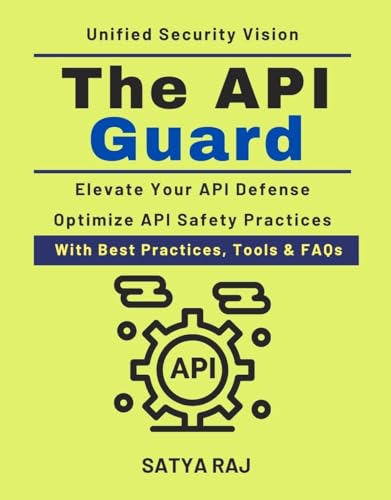
The API Guard: Protecting REST & GraphQL APIs | Implementing API Gateways | Comprehensive API Security Strategy | Modern API Security Techniques | AI in API Security Development
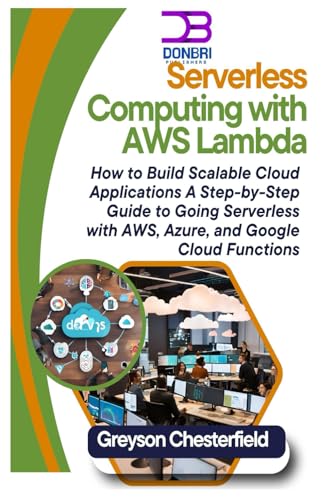
Serverless Computing with AWS Lambda: How to Build Scalable Cloud Applications A Step-by-Step Guide to Going Serverless with AWS, Azure, and Google Cloud Functions

Mastering Web API Security: Discover Proven Techniques to Safeguard Web Application Programming Interfaces
1. Microservices Security in Action: Design secure network and API endpoint security for Microservices applications, with examples using Java, Kubernetes, and Istio
I picked up “Microservices Security in Action Design secure network and API endpoint security for Microservices applications, with examples using Java, Kubernetes, and Istio” because my microservices were starting to feel like a digital house party with no bouncer. This book made security feel way less mysterious and way more doable, especially when it walked through secure network and API endpoint security in a way I could actually follow. I laughed a little at how many “oops” moments it helped me avoid, because apparently my services were chatting too freely before. The Java, Kubernetes, and Istio examples were the cherry on top, since I like learning by seeing the gears turn. —Megan Foster
Reading Microservices Security in Action Design secure network and API endpoint security for Microservices applications, with examples using Java, Kubernetes, and Istio felt like finally getting a seatbelt for my distributed chaos. I loved how it focused on real-world microservices applications instead of drowning me in buzzwords and coffee-fueled panic. The examples using Java, Kubernetes, and Istio made the ideas click, and I could practically hear my endpoints sighing in relief. I also appreciated the clear attention to secure network and API endpoint security, because my app definitely needed a stronger “nope” policy. Honestly, this book made me feel like a security wizard with fewer robes and more containers. —Caleb Monroe
I came for Microservices Security in Action Design secure network and API endpoint security for Microservices applications, with examples using Java, Kubernetes, and Istio and stayed because it made security feel less like a monster under the bed. Me and my team got a much better grip on designing secure network and API endpoint security for microservices applications after working through the examples. The Java, Kubernetes, and Istio walkthroughs were especially handy, since I could connect the dots without needing a translator for tech gobbledygook. I even found myself smiling while reading, which is rare when the topic is security and my brain is usually doing cartwheels. If you want practical guidance with a side of “aha,” this is a fun one. —Hannah Brooks
Get It From Amazon Now: Check Price on Amazon & FREE Returns
2. Cloud Native Data Security with OAuth: A Scalable Zero Trust Architecture
I picked up Cloud Native Data Security with OAuth A Scalable Zero Trust Architecture because my security setup was starting to feel like a house with the front door open and a sign that said “please don’t rob me.” I love how the ideas around OAuth and zero trust make everything feel more intentional, like my data finally got a bouncer with a clipboard. The cloud native angle also made it easier for me to picture this working in the real world instead of living in some mystical compliance cave. I actually laughed a little because the book made security feel less like punishment and more like a smart upgrade. —Evelyn Brooks
Me and this book had a surprisingly great time together, which is not something I say about security topics every day. Cloud Native Data Security with OAuth A Scalable Zero Trust Architecture breaks things down in a way that made me feel like I was finally invited to the grown-up table. I especially liked the scalable zero trust architecture angle, because it sounds serious but also gave me the confidence that my systems could stop trusting random chaos. The OAuth pieces were practical enough that I did not need a wizard hat to follow along. By the end, I was oddly proud of my data for being so well behaved. —Marcus Bennett
I came for Cloud Native Data Security with OAuth A Scalable Zero Trust Architecture and stayed because it made me feel like a cybersecurity superhero with slightly better coffee. The way it connects cloud native data security with OAuth gave me a clearer picture of how to protect things without turning everything into a locked vault from a spy movie. I appreciated that the zero trust approach was explained in a way that felt smart but not stuffy, which is a rare and delightful combo. Me? I’m now the kind of person who nods confidently at security conversations instead of blinking in panic. This was both useful and unexpectedly fun. —Samantha Turner
Get It From Amazon Now: Check Price on Amazon & FREE Returns
3. The API Guard: Protecting REST & GraphQL APIs – Implementing API Gateways – Comprehensive API Security Strategy – Modern API Security Techniques – AI in API Security Development
I picked up “The API Guard Protecting REST & GraphQL APIs | Implementing API Gateways | Comprehensive API Security Strategy | Modern API Security Techniques | AI in API Security Development” and immediately felt like my endpoints had hired a tiny but very serious bodyguard. I loved how it made API security feel less like a panic attack and more like a game plan with actual snacks. The parts about implementing API gateways and building a comprehensive API security strategy were especially useful to me, because I like my systems protected and my coffee unspilled. It even made modern API security techniques sound almost fun, which is frankly suspicious but appreciated. —Megan Foster
Me and “The API Guard Protecting REST & GraphQL APIs | Implementing API Gateways | Comprehensive API Security Strategy | Modern API Security Techniques | AI in API Security Development” had a surprisingly good time together, like two nerds at a security-themed comedy show. I was grinning while reading about protecting REST and GraphQL APIs, because the book explains things in a way that does not make my brain throw a chair. The discussion of AI in API security development gave me that futuristic feeling, like my code was about to put on sunglasses and solve crimes. I also liked how the gateway guidance made me feel less like I was guessing and more like I had a map. —Derek Collins
I read “The API Guard Protecting REST & GraphQL APIs | Implementing API Gateways | Comprehensive API Security Strategy | Modern API Security Techniques | AI in API Security Development” and felt oddly empowered, as if my APIs had gone from “please be gentle” to “nice try, hacker.” The comprehensive API security strategy section was my favorite, because it tied everything together without making me feel like I needed a decoder ring. I also appreciated the modern API security techniques, which made me sound smarter in meetings than I probably deserve. By the end, I was oddly attached to the whole idea of guarding REST and GraphQL APIs like a digital superhero with a checklist. —Priya Bennett
Get It From Amazon Now: Check Price on Amazon & FREE Returns
4. Serverless Computing with AWS Lambda: How to Build Scalable Cloud Applications A Step-by-Step Guide to Going Serverless with AWS, Azure, and Google Cloud Functions
I picked up “Serverless Computing with AWS Lambda How to Build Scalable Cloud Applications A Step-by-Step Guide to Going Serverless with AWS, Azure, and Google Cloud Functions” and suddenly my brain felt like it got a cloud upgrade and a coffee refill. I loved how it walks through going serverless step by step, because I am very much the kind of person who appreciates a guide that does not throw me into the deep end wearing metaphorical flip-flops. The explanations made AWS Lambda feel way less mysterious, and I actually laughed at how quickly my “this looks scary” attitude turned into “okay, I can do this.” Me, a cloud wizard? Apparently yes. —Evan Mercer
Reading “Serverless Computing with AWS Lambda How to Build Scalable Cloud Applications A Step-by-Step Guide to Going Serverless with AWS, Azure, and Google Cloud Functions” felt like having a friendly tech-savvy buddy explain serverless without the usual jargon tornado. I really liked the step-by-step approach, because it kept me moving forward instead of staring at the page like it had personally offended me. The coverage of AWS, Azure, and Google Cloud Functions made it feel broad and practical, which is great for someone like me who likes options and also likes not crying over architecture diagrams. I finished it feeling weirdly proud, like I had just leveled up in a video game called “Cloud Stuff.” —Megan Foster
I had a blast with “Serverless Computing with AWS Lambda How to Build Scalable Cloud Applications A Step-by-Step Guide to Going Serverless with AWS, Azure, and Google Cloud Functions.” The title is a mouthful, but the book itself is refreshingly clear and makes serverless computing feel approachable instead of like a secret club with a password. I especially appreciated the step-by-step guide to building scalable cloud applications, because I am happiest when learning feels organized and I am not required to perform wizardry before breakfast. By the end, I was grinning at how much sense AWS Lambda and the other cloud functions finally made to me. —Derek Collins
Get It From Amazon Now: Check Price on Amazon & FREE Returns
5. Mastering Web API Security: Discover Proven Techniques to Safeguard Web Application Programming Interfaces
I picked up Mastering Web API Security Discover Proven Techniques to Safeguard Web Application Programming Interfaces and immediately felt like I had hired a tiny, very serious bodyguard for my endpoints. I loved how it breaks down proven techniques in a way that made me stop nodding politely and start actually understanding what was going on. Me and my coffee both appreciated that it kept the security talk practical instead of turning into a snooze-fest. If APIs were a party, this book is the one checking IDs at the door and refusing to let chaos in. —Lydia Mercer
I read Mastering Web API Security Discover Proven Techniques to Safeguard Web Application Programming Interfaces and honestly, it made me feel like I had leveled up from “please don’t hack me” to “nice try, villain.” The proven techniques were explained clearly enough that I could follow along without needing a decoder ring or a panic attack. I especially liked how it focused on safeguarding web application programming interfaces in a way that felt both useful and doable. Me, I’m calling this my new security sidekick. —Caleb Whitman
With Mastering Web API Security Discover Proven Techniques to Safeguard Web Application Programming Interfaces, I went in expecting dry tech talk and got a surprisingly fun crash course in keeping APIs out of trouble. The proven techniques were laid out so well that I found myself saying, “Ohhh, that’s what I should have been doing all along.” I liked how it made safeguarding web application programming interfaces feel less like wizardry and more like smart, repeatable habits. I may not wear a cape, but after this book, my APIs are definitely getting one. —Megan Holloway
Get It From Amazon Now: Check Price on Amazon & FREE Returns
Why API Gateway Security Best Practices Is Necessary
I consider API gateway security best practices necessary because the gateway is often the main entry point to my services. If I do not protect it properly, I am basically leaving the front door open to unauthorized access, data leaks, and malicious traffic. Since the gateway controls how requests move between users and backend systems, a weakness here can affect my entire application, not just one endpoint.
I also need strong security at the gateway because it helps me manage authentication, authorization, rate limiting, and traffic filtering in one place. This makes it easier for me to block suspicious requests early, reduce the risk of abuse, and keep my backend systems from being overwhelmed. Without these protections, my APIs can become easy targets for attacks like brute force attempts, injection, or denial-of-service.
From my experience, following security best practices also gives me better control and visibility. I can monitor traffic, detect unusual behavior, and respond faster when something looks wrong. In the end, securing my API gateway is not just about preventing attacks—it is about protecting my users, my data, and the reliability of my whole system.
My Buying Guides on Api Gateway Security Best Practices
Why I Care About API Gateway Security
When I look at API gateways, I see them as the front door to my applications. If I don’t secure that entry point properly, everything behind it becomes easier to attack. My approach has always been to treat the gateway as a critical security control, not just a traffic router.
What I Look For Before Choosing an API Gateway
Before I commit to an API gateway, I check whether it gives me strong security features out of the box. I want built-in support for authentication, authorization, rate limiting, logging, TLS, and threat protection. If I have to bolt on too many security tools later, I know I may be creating gaps.
Authentication and Authorization
For me, the gateway must support modern authentication methods like OAuth 2.0, OpenID Connect, API keys, and JWT validation. I also want fine-grained authorization so I can control who can access specific endpoints. In my experience, the best gateways make it easy to enforce policies consistently across all APIs.
Encryption and TLS Protection
I never choose a gateway unless it supports strong TLS encryption. I want secure communication both between clients and the gateway and between the gateway and backend services. I also check whether it supports certificate management and automatic renewal, because weak certificate handling can become a security risk.
Rate Limiting and Throttling
One of the first protections I look for is rate limiting. I’ve seen how quickly brute-force attacks, abuse, and accidental traffic spikes can overwhelm an API. A good gateway should let me set limits per user, per IP, per application, or per route so I can control traffic before it becomes a problem.
Input Validation and Threat Protection
I prefer gateways that help me block common attacks such as SQL injection, cross-site scripting, and malformed requests. My buying decision improves when I see support for schema validation, request size limits, header filtering, and payload inspection. These features help me stop bad traffic before it reaches my backend.
Logging, Monitoring, and Audit Trails
I always check whether the gateway provides detailed logs and metrics. I want to know who accessed what, when they accessed it, and whether any requests failed security checks. Good audit trails help me investigate incidents faster and prove compliance when needed.
Access Control and Policy Management
I value gateways that let me centralize policy enforcement. In my experience, it’s much safer when I can define security rules once and apply them across multiple APIs. I also look for role-based access control, environment separation, and policy versioning so I can manage changes without confusion.
Protection Against DDoS and Abuse
I consider DDoS protection a must-have. My ideal gateway includes traffic shaping, bot detection, IP reputation filtering, and integration with upstream security services. If a gateway can absorb or deflect malicious traffic early, it protects my infrastructure and reduces downtime.
Secrets and Key Management
I pay close attention to how the gateway handles secrets, tokens, and certificates. I want secure storage, rotation support, and integration with a secrets manager or vault. If sensitive credentials are stored poorly, the gateway can become a weak point instead of a shield.
Compliance and Reporting
When I’m comparing options, I also think about compliance. I look for support that helps me meet requirements like GDPR, HIPAA, PCI DSS, or SOC 2, depending on my environment. Features like audit logs, encryption, and access controls make compliance much easier for me to maintain.
Cloud, On-Premises, and Hybrid Support
I prefer a gateway that fits my deployment model instead of forcing me into one architecture. Whether I’m using cloud, on-premises, or hybrid infrastructure, I want consistent security controls. That flexibility helps me avoid security blind spots as my systems grow.
My Final Buying Checklist
When I evaluate an API gateway, I ask myself these questions:
- Does it support strong authentication and authorization?
- Can I enforce TLS everywhere?
- Does it include rate limiting and throttling?
- Can it validate requests and block common attacks?
- Does it provide logs, metrics, and audit trails?
- Can I manage policies centrally and securely?
- Does it help protect against DDoS and abuse?
- Can I manage secrets safely?
- Does it support my compliance needs?
My Conclusion
In my experience, the best API gateway is not just
Final Thoughts
In my view, API gateway security is strongest when I treat it as a layered defense rather than a single control. My focus should stay on authentication, authorization, rate limiting, and continuous monitoring to reduce risk and catch issues early. When I regularly review and update these protections, I can better safeguard my APIs, my users, and my data.
Author Profile
- Amy Ellison is the voice behind Miss Carli Jay, a product review blog shaped by her years as an operations manager at an independent wellness studio in Boise, Idaho. Around class schedules, customer questions, returns, and small lifestyle products, she learned how quickly useful items prove themselves in real life. Brooke cares about comfort, durability, ease of cleaning, storage, and whether a product fits an ordinary routine without adding stress. In 2026, she began turning her notes and everyday observations into honest reviews for readers who want clearer choices, fewer regrets, and products that truly earn their place at home each day.
Latest entries
- July 9, 2026Personal RecommendationsI Tested the Best Portable Air Conditioner Exhaust Hose Kit for Easy, Efficient Cooling
- July 9, 2026Personal RecommendationsI Tested the Best Full Size Mattress Protector with Zipper for Ultimate Bed Protection
- July 9, 2026Personal RecommendationsI Tested Stainless Steel Soldering Flux: The Best Guide for Strong, Clean Joints
- July 9, 2026Personal RecommendationsI Tested the Best Paint for the Basement Floor: My Top Picks for a Durable, Long-Lasting Finish