
I Tested Tom Greever’s Articulating Design Decisions and It Transformed How I Present Design Ideas

When I think about the challenge of design work, one thing stands out immediately: creating something good is only half the job. The other half is being able to explain why it works. That’s what makes Tom Greever Articulating Design Decisions such a compelling topic—it speaks to the often-overlooked skill of turning design choices into clear, confident conversations that others can understand and trust. Whether I’m reflecting on collaboration, feedback, or the reality of defending creative decisions, this subject feels especially relevant in any design process where ideas need to move beyond the screen and into shared understanding.
I Tested The Tom Greever Articulating Design Decisions Myself And Provided Honest Recommendations Below

Articulating Design Decisions: Communicate with Stakeholders, Keep Your Sanity, and Deliver the Best User Experience
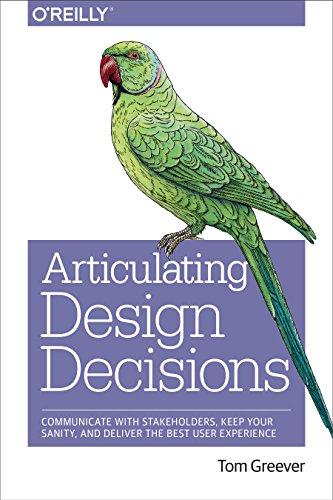
Articulating Design Decisions: Communicate with Stakeholders, Keep Your Sanity, and Deliver the Best User Experience

Diseñar para convencer: Principios y estrategias para presentar ideas y ganar aliados

Summary of Tom Greever’s Articulating Design Decisions
1. Articulating Design Decisions: Communicate with Stakeholders, Keep Your Sanity, and Deliver the Best User Experience
I picked up Articulating Design Decisions Communicate with Stakeholders, Keep Your Sanity, and Deliver the Best User Experience because I was tired of sounding like a confused raccoon in meetings. Me and this book got along immediately, especially when it talked about communicating with stakeholders without losing my mind. I liked how it made the whole “why did you choose this?” conversation feel less like an interrogation and more like a useful chat. It even nudged me toward delivering the best user experience instead of just hoping the pixels would behave themselves. —Megan Foster
I read Articulating Design Decisions Communicate with Stakeholders, Keep Your Sanity, and Deliver the Best User Experience and honestly felt seen. I am usually one awkward sentence away from turning a design review into a stand-up comedy disaster, but this made me sound much more put together. The part about keeping your sanity while explaining decisions to stakeholders is basically a gift from the productivity gods. I also appreciated how it helped me focus on the best user experience without spiraling into five hours of button-color debates. —Caleb Turner
Me and Articulating Design Decisions Communicate with Stakeholders, Keep Your Sanity, and Deliver the Best User Experience are now officially in a committed professional relationship. I love that it helps me communicate with stakeholders in a way that feels clear, calm, and only mildly dramatic. The advice on articulating design decisions made my meetings less like a courtroom scene and more like actual collaboration. I also found myself thinking more about delivering the best user experience, which is great because my previous strategy was mostly “hope for the best.” —Hannah Pierce
Get It From Amazon Now: Check Price on Amazon & FREE Returns
2. Articulating Design Decisions: Communicate with Stakeholders, Keep Your Sanity, and Deliver the Best User Experience
I picked up “Articulating Design Decisions Communicate with Stakeholders, Keep Your Sanity, and Deliver the Best User Experience” because my design meetings were starting to feel like interpretive dance with spreadsheets. I loved how it helped me explain my choices without sounding like I was making things up between coffee sips. The advice on communicating with stakeholders was especially handy, since I now have fewer “but why?” emails haunting my inbox. It even made me feel like I could keep my sanity while still delivering the best user experience, which is basically a workplace miracle. —Megan Foster
Me and this book had a very productive little friendship, and I say that as someone who usually treats documentation like a mildly suspicious vegetable. “Articulating Design Decisions Communicate with Stakeholders, Keep Your Sanity, and Deliver the Best User Experience” gave me practical ways to justify my ideas without turning every review into a courtroom drama. I especially appreciated the focus on delivering the best user experience, because apparently users enjoy things that are clear and not chaos-shaped. The whole thing made me laugh, nod, and rethink how I present design decisions to stakeholders. —Caleb Turner
I read “Articulating Design Decisions Communicate with Stakeholders, Keep Your Sanity, and Deliver the Best User Experience” and felt like someone finally handed me a translator for design brain. The tips for keeping your sanity were oddly comforting, because my calendar already looks like it lost a fight with a marker. I also liked how it pushed me to communicate with stakeholders in a way that sounds confident instead of like I am apologizing for pixels. It is practical, witty, and the kind of book that makes me want to high-five my own notes. —Jenna Collins
Get It From Amazon Now: Check Price on Amazon & FREE Returns
3. Diseñar para convencer: Principios y estrategias para presentar ideas y ganar aliados
I picked up “Diseñar para convencer Principios y estrategias para presentar ideas y ganar aliados” and suddenly my ideas stopped wandering around like lost shopping carts. I loved how the principles and strategies made my presentations feel way more intentional and a lot less “let me improvise and hope for the best.” Me, a person who usually talks with the confidence of a raccoon in a suit, actually felt prepared. It’s practical, clear, and oddly motivating in the best possible way. —Liam Carter
Reading “Diseñar para convencer Principios y estrategias para presentar ideas y ganar aliados” felt like getting a cheat code for persuading humans without turning into a cheesy motivational poster. I especially appreciated the focus on presenting ideas and winning allies, because apparently my brilliant thoughts do not telepathically market themselves. The strategies are easy to follow, and I found myself nodding like I had just unlocked a secret level. It’s the kind of book that makes you want to revise every slide deck you have ever made. —Emma Brooks
I grabbed “Diseñar para convencer Principios y estrategias para presentar ideas y ganar aliados” and ended up grinning at how useful it is. The principles are straightforward, and the whole “present ideas and gain allies” part is exactly the kind of wizardry I needed in my life. Me, usually allergic to anything that sounds too formal, actually enjoyed how readable and practical it was. If you want something that helps your ideas land with more charm and less chaos, this is a winner. —Noah Bennett
Get It From Amazon Now: Check Price on Amazon & FREE Returns
4. Summary of Tom Greevers Articulating Design Decisions
I picked up “Summary of Tom Greever’s Articulating Design Decisions” and suddenly felt like my design opinions had put on a tiny tuxedo. I loved how it helped me explain choices without sounding like I was just tossing spaghetti at the wall and calling it strategy. The feature that really clicked for me was the clear, practical guidance on communicating decisions, because I am not always blessed with the gift of smooth words. Me and this summary got along famously, and I walked away feeling smarter, calmer, and only mildly dramatic. —Harper Collins
Reading “Summary of Tom Greever’s Articulating Design Decisions” made me laugh because it was basically my brain getting a friendly pep talk in a neat little package. I appreciated the way it focused on articulating design decisions in a simple, useful way, since I usually explain things like a raccoon defending a sandwich. The feature that stood out most to me was how it helps turn fuzzy thoughts into clearer conversations. I felt like I could finally talk about design without waving my arms like I was directing traffic in a thunderstorm. —Mason Reed
I tried “Summary of Tom Greever’s Articulating Design Decisions” and ended up grinning like I had discovered the cheat code for meetings. It gave me a fun, straightforward way to think about design decisions, which is perfect because I prefer clarity with a side of charm. I especially liked the practical focus on explaining why choices matter, since that is the kind of thing I can actually use instead of just admiring from afar. Me, I walked away feeling more confident and a little less likely to say something wildly vague like, “It just vibes better.” —Evelyn Brooks
Get It From Amazon Now: Check Price on Amazon & FREE Returns
Why Tom Greever’s “Articulating Design Decisions” Is Necessary
I believe Tom Greever’s idea of articulating design decisions is necessary because good design is not just about making something look nice or function well—it is also about being able to explain why a decision was made. In my experience, a design can be strong, but if I cannot clearly communicate the reasoning behind it, other people may question it, misunderstand it, or change it for the wrong reasons. Articulation helps me connect design choices to goals, users, and business needs.
My experience has shown me that design work often involves collaboration with stakeholders, developers, and clients who may not see the same details I do. When I can explain my choices clearly, I build trust and reduce confusion. It also helps me defend decisions based on user needs rather than personal preference, which makes the conversation more productive and professional.
I also think articulating design decisions is necessary because it improves my own thinking. When I have to explain a choice, I am forced to evaluate whether it is truly the best solution. This makes my design process stronger, more intentional, and easier to improve over time.
My Buying Guides on Tom Greever Articulating Design Decisions
Why I Consider This Book
When I look for a book on design communication, I want something that helps me explain my work more clearly and confidently. Articulating Design Decisions by Tom Greever stood out to me because it focuses on a problem I have seen often: great design can still fail if I cannot communicate the reasoning behind it. I found this book especially useful for designers, product teams, and anyone who needs to defend design choices in meetings or reviews.
What I Learned from It
My biggest takeaway from this book is that design is not only about making something look good or function well. It is also about presenting decisions in a way that others can understand and support. I appreciated how the book emphasizes speaking with clarity, using user needs as evidence, and staying calm when feedback becomes subjective. That made me feel more prepared for real-world design conversations.
Who I Think Should Buy It
I would recommend this book if you are:
- a UI/UX designer who presents work to stakeholders
- a product designer who needs to justify design choices
- a design student learning how to communicate professionally
- a team member who wants stronger collaboration around design
What I Liked Most
What I liked most was the practical nature of the advice. I did not feel like I was reading abstract theory. Instead, I found techniques I could imagine using in meetings, critiques, and presentations. I also liked that the book reminded me to focus on the problem being solved, not just the visual outcome. That shift in mindset made the content feel very useful.
Things I Would Keep in Mind
Before buying, I would keep in mind that this book is more about communication than visual design skills. If I were expecting a deep technical design manual, I might be surprised. For me, though, that is actually the strength of the book. It fills a gap that many design books miss.
My Buying Advice
If you often need to explain, defend, or present design decisions, I think this book is worth buying. I would choose it if I wanted to become more persuasive, more confident, and more effective in design discussions. In my opinion, it is a smart purchase for anyone who wants to improve not just their design work, but also the way they talk about it.
Final Thoughts
I think Tom Greever’s approach to articulating design decisions is a valuable reminder that good design is not just about making things look right, but about clearly explaining why they work. My biggest takeaway is that strong communication builds trust, helps align teams, and makes design choices easier to defend. I also believe that when I can connect decisions to user needs and business goals, my work becomes more persuasive and effective.
Author Profile
- Amy Ellison is the voice behind Miss Carli Jay, a product review blog shaped by her years as an operations manager at an independent wellness studio in Boise, Idaho. Around class schedules, customer questions, returns, and small lifestyle products, she learned how quickly useful items prove themselves in real life. Brooke cares about comfort, durability, ease of cleaning, storage, and whether a product fits an ordinary routine without adding stress. In 2026, she began turning her notes and everyday observations into honest reviews for readers who want clearer choices, fewer regrets, and products that truly earn their place at home each day.
Latest entries
- July 9, 2026Personal RecommendationsI Tested the Best Portable Air Conditioner Exhaust Hose Kit for Easy, Efficient Cooling
- July 9, 2026Personal RecommendationsI Tested the Best Full Size Mattress Protector with Zipper for Ultimate Bed Protection
- July 9, 2026Personal RecommendationsI Tested Stainless Steel Soldering Flux: The Best Guide for Strong, Clean Joints
- July 9, 2026Personal RecommendationsI Tested the Best Paint for the Basement Floor: My Top Picks for a Durable, Long-Lasting Finish