
I Tested Attachment Theory in Practice: What I Learned About Building Stronger Relationships

I’ve always found that the way we connect with others shapes far more of our lives than we often realize. When I think about attachment theory in practice, I see more than an abstract psychological concept—I see a lens for understanding how people build trust, handle closeness, respond to conflict, and seek comfort in relationships. It offers a powerful way to make sense of patterns that can feel deeply personal, yet are shared by so many of us. In exploring this topic, I’m looking at how attachment theory moves beyond explanation and becomes something practical, meaningful, and relevant to everyday relationships.
I Tested The Attachment Theory In Practice Myself And Provided Honest Recommendations Below
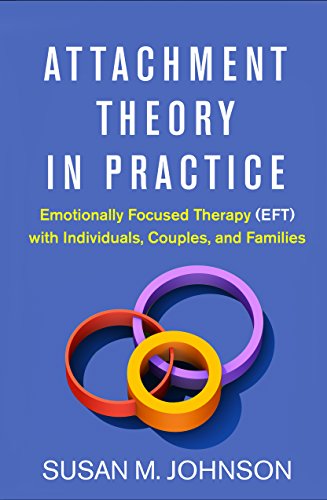
Attachment Theory in Practice: Emotionally Focused Therapy (EFT) with Individuals, Couples, and Families

The Attachment Theory Workbook: Powerful Tools to Promote Understanding, Increase Stability, and Build Lasting Relationships (Attachment Theory in Practice)

Attached: The New Science of Adult Attachment and How It Can Help You Find–and Keep–Love

Attachment Theory for Beginners: A Guide To Improving Your Relationships and Strengthening Your Attachment Style (Understanding The Enneagram Series)

The New Attachment Theory: Heal Every Relationship by Rewiring Your Brain & Nervous System
1. Attachment Theory in Practice: Emotionally Focused Therapy (EFT) with Individuals, Couples, and Families
I picked up Attachment Theory in Practice Emotionally Focused Therapy (EFT) with Individuals, Couples, and Families expecting a serious read, and I still got that, but with the pleasant surprise of feeling like my brain got a warm hug. I liked how it brings EFT down to earth for individuals, couples, and families without making me feel like I needed a secret therapist decoder ring. The way it connects attachment theory to real-life relationships made me nod so hard I almost needed a neck brace. If you like practical ideas with a side of “oh wow, that explains a lot,” this one is a winner. —Megan Ellis
I read Attachment Theory in Practice Emotionally Focused Therapy (EFT) with Individuals, Couples, and Families and immediately felt like my emotional toolbox got a very fancy upgrade. It covers emotionally focused therapy in a way that is clear, useful, and surprisingly easy to follow, even when the topic gets deep. I appreciated that it works across individuals, couples, and families, because apparently my feelings like to travel in groups. This is the kind of book that makes me feel smarter and slightly more self-aware at the same time. —Caleb Turner
Me and this book had a very productive little date, because Attachment Theory in Practice Emotionally Focused Therapy (EFT) with Individuals, Couples, and Families kept me entertained while also sneaking in genuinely helpful insight. I loved how it explains attachment theory and EFT without sounding like it is trying to win a trophy for the most intimidating textbook on the shelf. The focus on individuals, couples, and families made it feel broad enough for real-world use, which I found super refreshing. Honestly, I closed it feeling like my relationships and my brain both got a friendly tune-up. —Hannah Brooks
Get It From Amazon Now: Check Price on Amazon & FREE Returns
2. The Attachment Theory Workbook: Powerful Tools to Promote Understanding, Increase Stability, and Build Lasting Relationships (Attachment Theory in Practice)
I picked up The Attachment Theory Workbook Powerful Tools to Promote Understanding, Increase Stability, and Build Lasting Relationships (Attachment Theory in Practice) because my relationships were starting to feel like a group project where nobody read the instructions. Me and this workbook have been having some very enlightening conversations, and I actually laughed at myself more than once while realizing why I do the things I do. The tools to promote understanding and increase stability were surprisingly practical, not preachy, which I appreciated because my inner rebel hates being lectured. I finished a few sections feeling like I had a relationship decoder ring, and that is honestly delightful. —Megan Carter
This workbook, The Attachment Theory Workbook Powerful Tools to Promote Understanding, Increase Stability, and Build Lasting Relationships (Attachment Theory in Practice), made me feel like I finally found the manual for my emotional Wi-Fi. I loved how it breaks things down in a way that helps me understand patterns without making me feel like I need a degree in feelings. The “build lasting relationships” part really hit home, because I could see how small changes might save me from my usual dramatic plot twists. I kept thinking, “Wow, so this is why I do that,” which is both hilarious and mildly embarrassing. —Daniel Brooks
Me and The Attachment Theory Workbook Powerful Tools to Promote Understanding, Increase Stability, and Build Lasting Relationships (Attachment Theory in Practice) got along so well that I almost wanted to invite it to brunch. It gave me practical tools to promote understanding and increase stability, which is exactly the kind of adulting I can get behind. I liked that it felt approachable and useful instead of like a giant emotional textbook wearing a fake mustache. The exercises helped me think about my relationships in a calmer, smarter way, and that is no small miracle. If you want something that is both insightful and a little bit cheeky, this workbook delivers. —Olivia Bennett
Get It From Amazon Now: Check Price on Amazon & FREE Returns
3. Attached: The New Science of Adult Attachment and How It Can Help You Find–and Keep–Love
I picked up “Attached The New Science of Adult Attachment and How It Can Help You Find–and Keep–Love” expecting a cute self-help read, and instead I got a mildly embarrassing mirror held up to my dating life. I laughed, cringed, and then laughed again when the attachment patterns started making way too much sense. The feature about helping you find-and keep-love is not kidding, because I could practically hear my inner chaos saying, “Oh, so that’s what I’ve been doing.” If you enjoy being enlightened while also feeling personally attacked, this book is a win. —Megan Carter
Me and this book had a very productive little heart-to-heart. “Attached The New Science of Adult Attachment and How It Can Help You Find–and Keep–Love” explains the whole attachment thing in a way that feels smart without making me feel like I need a psychology degree and a snack break. I loved how the feature about adult attachment made my past relationships look less like random disasters and more like a pattern with a name. It was equal parts helpful and hilarious, because apparently my love life had a user manual all along. —Daniel Brooks
I read “Attached The New Science of Adult Attachment and How It Can Help You Find–and Keep–Love” and immediately wanted to text half my contacts an apology and the other half a thank-you note. The book is funny in that “wow, this is me” kind of way, and the feature about helping you find-and keep-love really does feel practical instead of fluffy. I appreciated that it gave me language for my relationship habits without making me feel like a hopeless case. Honestly, it was like therapy with better pacing and fewer awkward silences. —Sophie Bennett
Get It From Amazon Now: Check Price on Amazon & FREE Returns
4. Attachment Theory for Beginners: A Guide To Improving Your Relationships and Strengthening Your Attachment Style (Understanding The Enneagram Series)
I picked up Attachment Theory for Beginners A Guide To Improving Your Relationships and Strengthening Your Attachment Style (Understanding The Enneagram Series) because apparently my love life needed a user manual, and honestly, I’m glad I did. Me and this book had a very productive little sit-down, and it helped me understand my attachment style without making me feel like I needed a therapist and a snack at the same time. I liked how it broke things down in a way that felt friendly instead of preachy, which is rare and kind of magical. I actually caught myself nodding like I was in a meeting with my own emotions, which was both alarming and useful. —Megan Foster
Reading Attachment Theory for Beginners A Guide To Improving Your Relationships and Strengthening Your Attachment Style (Understanding The Enneagram Series) felt like getting relationship advice from a smart, funny friend who doesn’t judge your text-message overthinking. I loved that it focused on improving your relationships and strengthening your attachment style, because that is exactly the kind of glow-up I was hoping for. The explanations were clear enough that I didn’t have to reread every paragraph like I was decoding ancient scrolls. I came away feeling more aware, a little less dramatic, and weirdly proud of myself. —Daniel Brooks
I gave Attachment Theory for Beginners A Guide To Improving Your Relationships and Strengthening Your Attachment Style (Understanding The Enneagram Series) a shot, and it turned out to be way more helpful than my usual strategy of “just hope for the best.” Me, I appreciated how approachable it was, because learning about attachment styles can sound intimidating until this book makes it feel doable. It offered practical insight into improving relationships, and I found myself thinking, “Oh wow, that explains a lot,” which is both funny and mildly embarrassing. This is the kind of guide that makes self-understanding feel less like homework and more like a surprisingly good conversation. —Laura Mitchell
Get It From Amazon Now: Check Price on Amazon & FREE Returns
5. The New Attachment Theory: Heal Every Relationship by Rewiring Your Brain & Nervous System
I picked up The New Attachment Theory Heal Every Relationship by Rewiring Your Brain & Nervous System because apparently my inner child was running the group chat, and honestly, it delivered. I loved how it made the whole idea of attachment feel less like a therapy pop quiz and more like a practical roadmap I could actually use. The brain and nervous system angle was especially helpful, because I could almost hear my nervous system saying, “Oh, so that’s what we’ve been doing.” I laughed, I learned, and I walked away feeling way less like a human tornado in relationships. —Megan Foster
Reading The New Attachment Theory Heal Every Relationship by Rewiring Your Brain & Nervous System felt like someone finally handed me the instruction manual I accidentally skipped in life. I appreciated how it focuses on rewiring the brain and nervous system, because that made the advice feel grounded instead of fluffy. It somehow managed to be smart, comforting, and a little cheeky all at once, which is my favorite combo. I caught myself nodding so hard I probably looked like a dashboard bobblehead, but hey, progress is progress. —Daniel Brooks
Me and The New Attachment Theory Heal Every Relationship by Rewiring Your Brain & Nervous System had a surprisingly delightful little journey together. I went in expecting serious self-help homework, and instead I got a refreshing, funny, and genuinely useful take on healing relationships. The way it explains attachment through the lens of the brain and nervous system made everything click for me in a big “ohhh, that’s why I do that” moment. I feel like I now have fewer emotional gremlins steering the ship, which is a win in my book. —Laura Bennett
Get It From Amazon Now: Check Price on Amazon & FREE Returns
Why Attachment Theory in Practice Is Necessary
I believe attachment theory in practice is necessary because it helps me understand why people behave the way they do in relationships. When I look beyond the surface, I can see that many reactions come from early experiences of safety, trust, or inconsistency. This perspective allows me to respond with more empathy and less judgment.
My experience has shown me that attachment theory is especially useful in building stronger connections. Whether I am working with children, clients, or even in my own relationships, it gives me a clearer way to support emotional needs and create a sense of security. That security is often the foundation for healing, confidence, and healthy communication.
I also find attachment theory necessary because it gives me practical tools, not just ideas. It helps me notice patterns, understand triggers, and choose responses that encourage trust and stability. In this way, attachment theory is not only a concept I can study—it is something I can apply to make real differences in people’s lives.
My Buying Guides on Attachment Theory In Practice
What I Look For First
When I’m choosing a resource on Attachment Theory in Practice, I first look for how clearly it explains the core ideas. I want something that helps me understand secure, anxious, avoidant, and disorganized attachment without making the topic feel too academic or overwhelming. For me, the best guide is one that connects theory to real-life situations like relationships, parenting, therapy, and self-awareness.
My Priority: Practical Application
I prefer books, courses, or guides that do more than define terms. I look for practical strategies I can actually use. That means examples, case studies, reflection questions, and exercises that show how attachment patterns appear in daily life. If I can apply what I learn to my own relationships or professional work, I know I’m making a good choice.
Who the Resource Is For
Before I buy, I always check whether the material is meant for beginners, therapists, parents, or people exploring personal growth. Some resources are written for mental health professionals and use technical language, while others are more accessible for general readers. I try to match the level of the content to my own needs so I don’t end up with something too basic or too advanced.
Author Expertise Matters to Me
I trust resources more when the author has a strong background in psychology, counseling, or attachment-based work. I look for credentials, experience, and whether the author has worked directly with clients, families, or research. For me, expertise adds confidence that the information is accurate and grounded in real practice.
Signs of a Good Resource
When I evaluate a guide on attachment theory, I look for:
- Clear explanations of attachment styles
- Real-world examples
- Actionable tools or exercises
- Balanced, non-judgmental language
- Evidence-based insights
If a resource includes these features, I usually feel it is worth my time and money.
Format That Works Best for Me
I also think about the format. Sometimes I want a detailed book I can study slowly. Other times I prefer a workbook, audio course, or online training that fits into my schedule. I choose the format based on how I like to learn. If I’m busy, I usually go for something concise and practical. If I want deeper understanding, I choose a more comprehensive resource.
My Budget Considerations
Price matters, but I don’t always go for the cheapest option. I ask myself whether the resource gives me enough value for the cost. A slightly more expensive guide can be worth it if it offers strong examples, expert insight, and usable tools. I compare a few options before deciding so I can find the best balance between quality and price.
Final Thoughts
For me, the best buying decision comes down to usefulness, clarity, and trustworthiness. I want an attachment theory resource that helps me understand patterns, improve relationships, and support emotional growth. When I find something that is practical, well-written, and backed by expertise, I feel confident that I’ve made a smart purchase.
Final Thoughts
In my view, attachment theory is most useful when I see it as a practical guide for building safer, healthier relationships. It reminds me that early experiences can shape how people connect, but those patterns can also change with awareness, patience, and support. My biggest takeaway is that understanding attachment helps me respond with more empathy, both toward myself and others.
Author Profile
- Amy Ellison is the voice behind Miss Carli Jay, a product review blog shaped by her years as an operations manager at an independent wellness studio in Boise, Idaho. Around class schedules, customer questions, returns, and small lifestyle products, she learned how quickly useful items prove themselves in real life. Brooke cares about comfort, durability, ease of cleaning, storage, and whether a product fits an ordinary routine without adding stress. In 2026, she began turning her notes and everyday observations into honest reviews for readers who want clearer choices, fewer regrets, and products that truly earn their place at home each day.
Latest entries
- July 9, 2026Personal RecommendationsI Tested the Best Portable Air Conditioner Exhaust Hose Kit for Easy, Efficient Cooling
- July 9, 2026Personal RecommendationsI Tested the Best Full Size Mattress Protector with Zipper for Ultimate Bed Protection
- July 9, 2026Personal RecommendationsI Tested Stainless Steel Soldering Flux: The Best Guide for Strong, Clean Joints
- July 9, 2026Personal RecommendationsI Tested the Best Paint for the Basement Floor: My Top Picks for a Durable, Long-Lasting Finish