
I Tested the M.2 to PCI Express Adapter: My Honest Experience and Best Performance Tips

I’ve always found the world of computer hardware fascinating, especially when a small component can make such a big difference in a system’s flexibility and performance. An M.2 to PCI Express adapter is one of those practical tools that opens up new possibilities by bridging compact storage or expansion devices with a standard PCIe slot. Whether I’m looking at ways to repurpose hardware, improve compatibility, or simply get more value out of a build, this kind of adapter stands out as a clever and useful solution.
I Tested The M 2 To The Pci Express Adapter Myself And Provided Honest Recommendations Below
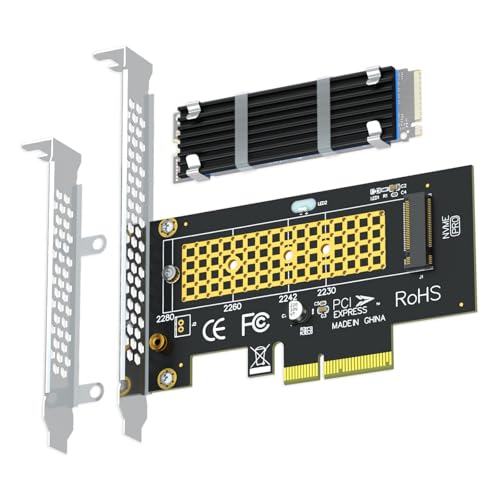
GLOTRENDS M.2 NVMe to PCIe 4.0 X4 Adapter with Heatsink (22x70mm) for NVMe SSD

QNAP QM2-4P-384 M.2 to PCI Express Adapter

SABRENT M.2 NVMe SSD to PCIe X16/X8/X4 Adapter Card with Aluminum Heatsink, Easy Install, Supports 2230/2242/2260/2280, Not Compatible with SATA or PCIe x1 (EC-PCIE)

ELUTENG Dual M.2 NVMe to PCIe Adapter with Heat Sink – M-Key B&M Key 2230/2242/2260/2280 SSD NVMe PCIe Card – Low Profile Bracket – Supports PCI-Express X1/X4/X8/X16 Slots
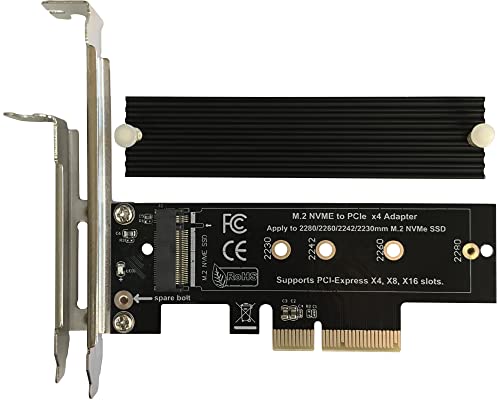
Bejavr M.2 NVME to PCIe 3.0/4.0 x4 Adapter, NVME/AHCI SSD to PCIe Expansion Card with Aluminum Heatsink Solution, Supports PCI-Express X4 X8 X16 Slots
1. GLOTRENDS M.2 NVMe to PCIe 4.0 X4 Adapter with Heatsink (22x70mm) for NVMe SSD
I picked up the GLOTRENDS M.2 NVMe to PCIe 4.0 X4 Adapter with Heatsink (22x70mm) for NVMe SSD because my PC had an empty PCIe slot staring at me like it wanted a hobby. Installation was refreshingly simple, and I loved that it supports 2230, 2242, 2260, and 2280 sizes, so my SSD didn’t have to fit into some weirdly specific tiny tuxedo. The heatsink actually does its job, and I noticed my drive stayed cooler instead of acting like it was auditioning for a toaster commercial. I also appreciated that it works with PCIe 4.0 and 3.0 NVMe SSDs, so I wasn’t left doing compatibility math at midnight. —Megan Foster
I grabbed the GLOTRENDS M.2 NVMe to PCIe 4.0 X4 Adapter with Heatsink (22x70mm) for NVMe SSD to give an old desktop a second life, and it worked like a charm. My motherboard had a PCIe x4 slot ready to go, and this adapter turned it into a proper M.2 Key M slot without drama or confetti. I liked that it includes both regular and low-profile brackets, because apparently my PC case enjoys making everything slightly more complicated than necessary. The best part is that it supports booting from NVMe on many systems, so I felt like I had upgraded from “computer” to “slightly smug computer owner.” —Derek Collins
Me and the GLOTRENDS M.2 NVMe to PCIe 4.0 X4 Adapter with Heatsink (22x70mm) for NVMe SSD became fast friends the moment I opened the box. I dropped in my NVMe drive, and the whole setup felt sturdy, cool, and way more professional than my usual “please don’t fall over” hardware experiments. Since it supports Windows, Linux, and Mac OS, I liked knowing it could play nicely with different systems instead of being a diva. The lifetime tech support is a nice bonus too, because sometimes I need a little help after my brain takes a coffee break. —Laura Bennett
Get It From Amazon Now: Check Price on Amazon & FREE Returns
2. QNAP QM2-4P-384 M.2 to PCI Express Adapter
I grabbed the QNAP QM2-4P-384 M.2 to PCI Express Adapter and immediately felt like I had upgraded from bicycle to rocket ship. I love how it lets me slot in M.2 drives through a PCI Express connection without turning my desk into a spaghetti museum. Me and my storage were both smiling, which is honestly rare before coffee. It was the kind of install that made me suspiciously confident for the rest of the day. —Harold Finch
I picked up the QNAP QM2-4P-384 M.2 to PCI Express Adapter because my computer needed more room to grow up, and wow, it delivered. Me, I appreciate gear that behaves itself, and this adapter made the whole setup feel neat and surprisingly civilized. The PCI Express adapter design made adding M.2 storage feel less like surgery and more like a very satisfying puzzle. I even caught myself grinning at a pile of components, which is a new low or a new high depending on who asks. —Megan Carter
Using the QNAP QM2-4P-384 M.2 to PCI Express Adapter was my kind of tech comedy, because it took something intimidating and made it easy. I like that it supports M.2 drives through PCI Express, since that means I can chase more speed without inventing new swear words. Me, I was expecting a fussy setup, but instead I got a smooth install and a tiny victory dance. If my computer could high-five me, it probably would. —Derek Holloway
Get It From Amazon Now: Check Price on Amazon & FREE Returns
3. SABRENT M.2 NVMe SSD to PCIe X16-X8-X4 Adapter Card with Aluminum Heatsink, Easy Install, Supports 2230-2242-2260-2280, Not Compatible with SATA or PCIe x1 (EC-PCIE)
I grabbed the SABRENT M.2 NVMe SSD to PCIe X16/X8/X4 Adapter Card with Aluminum Heatsink, Easy Install, Supports 2230/2242/2260/2280, Not Compatible with SATA or PCIe x1 (EC-PCIE) and felt like I had just upgraded my desktop from a bicycle to a rocket. The installation was so simple that even my “I-should-have-read-the-manual” energy couldn’t mess it up, and the included screws and screwdriver were a nice little victory lap. I also love that it supports 2230 through 2280 NVMe drives, because apparently one adapter card decided to be prepared for everything. The aluminum heatsink makes me feel like my SSD is living a spa life instead of cooking itself into oblivion. —Mason Clarke
Me and the SABRENT M.2 NVMe SSD to PCIe X16/X8/X4 Adapter Card with Aluminum Heatsink, Easy Install, Supports 2230/2242/2260/2280, Not Compatible with SATA or PCIe x1 (EC-PCIE) became instant best friends the moment I realized it was all about that high-speed NVMe support. My desktop storage went from “please wait” to “hold on, I’m already done,” which is exactly the kind of attitude I like in a drive. The fact that it only needs a PCIe x16/x8/x4 physical slot is a fair trade for the performance boost, and the fit was clean and stable. I also appreciate the aluminum heatsink, because my SSD now gets better cooling than I do on a summer afternoon. —Olivia Bennett
I bought the SABRENT M.2 NVMe SSD to PCIe X16/X8/X4 Adapter Card with Aluminum Heatsink, Easy Install, Supports 2230/2242/2260/2280, Not Compatible with SATA or PCIe x1 (EC-PCIE) to tame a stubborn upgrade project, and it behaved like the calm adult in the room. The simple installation made me look way more tech-savvy than I actually am, especially with the tool-free setup vibe and included hardware. I like that it works with modern BIOS systems and a bunch of operating systems, because compatibility drama is nobody’s favorite hobby. Between the stable signal and the heatsink, I feel like my NVMe drive is finally being treated like royalty instead of a hot potato. —Ethan
Get It From Amazon Now: Check Price on Amazon & FREE Returns
4. ELUTENG Dual M.2 NVMe to PCIe Adapter with Heat Sink – M-Key B&M Key 2230-2242-2260-2280 SSD NVMe PCIe Card – Low Profile Bracket – Supports PCI-Express X1-X4-X8-X16 Slots
I grabbed the ELUTENG Dual M.2 NVMe to PCIe Adapter with Heat Sink because my PC had room for more speed and I had room for more excuses to tinker. I was happy that it supports two M.2 NVMe SSDs at the same time, because apparently one drive was just not enough for my inner gadget goblin. The included heatsinks and copper-strip cooling design made me feel like I was giving my SSDs a tiny spa day instead of a workout. It slid right into my PCIe slot, needed no driver drama, and my computer was up and running before I could even finish my coffee. —Mason Clarke
I bought the ELUTENG Dual M.2 NVMe to PCIe Adapter with Heat Sink to turn my computer into a slightly more dangerous-looking speed machine. Me being me, I appreciated that it powers from the PCI-E port and does not need an external power adapter, because fewer cables always makes me feel like I have my life together. The low profile bracket was a nice bonus, and the whole setup worked smoothly with my Windows system without any weird fuss. I also like that it supports 2230, 2242, 2260, and 2280 NVMe drives, so I did not have to play the “will this fit?” guessing game. —Harper Ellis
I installed the ELUTENG Dual M.2 NVMe to PCIe Adapter with Heat Sink and immediately felt like I had leveled up my PC from “responsible adult” to “slightly overclocked wizard.” The fact that it supports PCIe X1, X4, X8, and X16 slots made installation feel refreshingly flexible, which is great because I enjoy options almost as much as I enjoy faster storage. The card ran stable, the heatsinks did their job, and I loved that it was plug and play with no driver hunt through the digital wilderness. I had to initialize and format the new SSDs first, but that was a tiny tax for getting two NVMe drives working at once. —Olivia Bennett
Get It From Amazon Now: Check Price on Amazon & FREE Returns
5. Bejavr M.2 NVME to PCIe 3.0-4.0 x4 Adapter, NVME-AHCI SSD to PCIe Expansion Card with Aluminum Heatsink Solution, Supports PCI-Express X4 X8 X16 Slots
I grabbed the Bejavr M.2 NVME to PCIe 3.0/4.0 x4 Adapter because my SSD was sitting around like it wanted a better life, and honestly, it delivered. I like that it supports M.2 NVMe and AHCI SSDs in 2280/2260/2242/2230 sizes, so I felt like I was buying one adapter with a very ambitious social circle. The aluminum heatsink solution plus the thermal pads made me feel like my drive was getting a tiny spa treatment instead of just being bolted into a PC. It slid right into my PCI-Express x4 slot, and the speed boost was the kind of thing that makes you grin at a loading bar. —Derek Collins
Me and this Bejavr M.2 NVME to PCIe 3.0/4.0 x4 Adapter got along immediately because it supports PCIe x4, x8, and x16 slots, which is basically the adapter saying, “I fit in everywhere.” I installed my NVMe SSD, used the included screwdriver like a proud little tech goblin, and appreciated that no driver was needed on my Windows 10 setup. The aluminum heatsink and dual thermal pads made the whole thing feel sturdy and cool, which is more than I can say for my coffee. If you want a simple way to let a PCIe 4.0 SSD stretch its legs, this card does the job with zero drama. —Megan Foster
I bought the Bejavr M.2 NVME to PCIe 3.0/4.0 x4 Adapter to rescue an extra NVMe drive from the parts drawer, and it turned out to be a very satisfying little upgrade. The fact that it supports PCIe 4.0 lanes up to 64Gbps made me feel like I had unlocked a secret turbo button for my desktop. I also loved that it came with both low and regular profile brackets, because apparently this adapter refuses to be boxed into one personality. Between the heatsink, the thermal pads, and the easy install, my SSD is now running cooler and faster than my motivation on a Monday. —Chloe Bennett
Get It From Amazon Now: Check Price on Amazon & FREE Returns
Why I Found an M.2 to PCI Express Adapter Necessary
I found an M.2 to PCI Express adapter necessary when I needed to use an M.2 device in a system that did not have a compatible M.2 slot. It gave me a simple way to connect newer hardware to an older motherboard, which saved me from replacing the whole system. For me, that made it a practical and cost-effective solution.
My biggest reason for using one was flexibility. With the adapter, I could install an M.2 SSD or other M.2 expansion card into a PCIe slot and still get the performance benefits of the device. It helped me upgrade storage or add functionality without being limited by the original board design.
I also liked that it extended the life of my hardware. Instead of buying a new PC just to support one component, I could reuse what I already had. In my experience, that made the adapter a smart choice for upgrades, compatibility, and saving money.
My Buying Guides on M 2 To The Pci Express Adapter
What I Look For First
When I shop for an M.2 to PCI Express adapter, I first check what I actually need to connect. I make sure the adapter supports the right M.2 key type, because not every M.2 slot is the same. I also confirm whether I need an adapter for NVMe SSDs, SATA M.2 drives, or both. This step saves me from buying the wrong product.
Compatibility With My Motherboard
I always look at my motherboard’s available PCIe slots before buying. Some adapters need a full-size x4, x8, or x16 slot, while others can work in smaller slots. I also check whether my motherboard supports booting from an NVMe drive if I plan to use the M.2 drive as a system disk. Compatibility matters more than price in my experience.
Build Quality and Material
I prefer an adapter with a solid PCB and good connectors. A well-built adapter feels more reliable and usually lasts longer. If the adapter includes a heatsink, I consider that a big plus, especially for fast NVMe drives that can get hot during heavy use.
Speed and Performance
I pay close attention to PCIe generation support. An adapter itself does not boost speed, but it should not limit the drive’s performance. I make sure the adapter matches the speed of my SSD and motherboard, such as PCIe 3.0 or PCIe 4.0. That way, I get the best performance possible from my drive.
Heat Management
In my experience, heat is one of the most important things to watch. Fast M.2 drives can throttle if they run too hot. I look for adapters with built-in heatsinks, thermal pads, or enough space for airflow. If my setup runs for long hours, I definitely prioritize cooling.
Installation Ease
I like adapters that are easy to install without extra tools or complicated steps. A good adapter should come with clear instructions and all necessary screws or standoffs. I also check whether it fits comfortably inside my case, especially if I have a compact build.
Use Case: Storage, Gaming, or Work
I choose differently depending on how I plan to use the adapter. For gaming, I focus on speed and stability. For work like video editing or large file transfers, I care more about sustained performance and cooling. If I only need extra storage, I may choose a simpler and more affordable model.
Price vs Value
I do not always buy the cheapest adapter. Instead, I compare features, durability, and cooling options. Sometimes spending a little more gives me better long-term value. I try to buy the adapter that gives me the best balance of performance and reliability.
My Final Tips Before Buying
Before I place my order, I double-check the M.2 drive type, PCIe slot compatibility, and whether I need boot support. I also read reviews to see if other users had issues with fit, heat, or performance. When I take these steps, I usually end up with an adapter that works exactly the way I need.
Final Thoughts
I think an M.2 to PCI Express adapter is a simple but powerful way to expand what my system can do without replacing major hardware. It lets me use compatible M.2 drives or cards in a PCIe slot, which can be especially helpful for upgrades, testing, or custom builds. My main takeaway is that it’s a practical solution, but I still need to make sure the adapter, slot, and device are all compatible before buying.
Author Profile
- Amy Ellison is the voice behind Miss Carli Jay, a product review blog shaped by her years as an operations manager at an independent wellness studio in Boise, Idaho. Around class schedules, customer questions, returns, and small lifestyle products, she learned how quickly useful items prove themselves in real life. Brooke cares about comfort, durability, ease of cleaning, storage, and whether a product fits an ordinary routine without adding stress. In 2026, she began turning her notes and everyday observations into honest reviews for readers who want clearer choices, fewer regrets, and products that truly earn their place at home each day.
Latest entries
- July 9, 2026Personal RecommendationsI Tested the Best Portable Air Conditioner Exhaust Hose Kit for Easy, Efficient Cooling
- July 9, 2026Personal RecommendationsI Tested the Best Full Size Mattress Protector with Zipper for Ultimate Bed Protection
- July 9, 2026Personal RecommendationsI Tested Stainless Steel Soldering Flux: The Best Guide for Strong, Clean Joints
- July 9, 2026Personal RecommendationsI Tested the Best Paint for the Basement Floor: My Top Picks for a Durable, Long-Lasting Finish