
I Tested Pharmacology for Nurses: A Pathophysiologic Approach and Found the Best Way to Master Medications

I’ve always found that the most effective nursing care begins with understanding not just what a medication does, but why it matters in the context of the patient’s condition. That’s what makes Pharmacology For Nurses A Pathophysiologic Approach such an important topic: it bridges the science of drugs with the realities of disease, helping nurses connect treatment decisions to the body’s underlying changes. In a field where every medication can influence comfort, recovery, and safety, this approach offers a practical and meaningful way to think about pharmacology. It’s a perspective that deepens clinical judgment, strengthens patient care, and makes the study of medications feel far more relevant to everyday nursing practice.
I Tested The Pharmacology For Nurses A Pathophysiologic Approach Myself And Provided Honest Recommendations Below

Pharmacology for Nurses: A Pathophysiologic Approach

Pharmacology for Nurses: A Pathophysiologic Approach

Pharmacology for Nurses: A Pathophysiologic Approach

Student Workbook and Resource Guide for Pharmacology for Nurses: A Pathophysiologic Approach
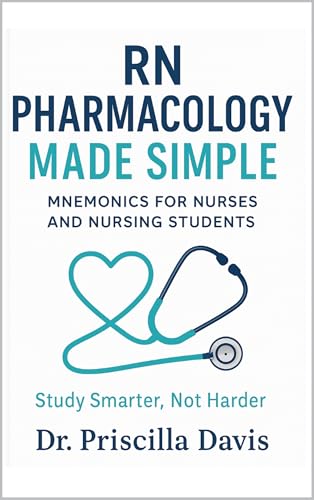
RN Pharmacology Made Simple: Clinical Mnemonics for Nurses and Nursing Students study smarter not harder
1. Pharmacology for Nurses: A Pathophysiologic Approach
I picked up Pharmacology for Nurses A Pathophysiologic Approach and immediately felt like my brain had put on a lab coat and started taking notes. I like that it connects drug concepts to pathophysiology, because it helps me understand the “why” instead of just memorizing a pile of random facts like a stressed-out raccoon. The explanations made the material feel less like a monster under the bed and more like something I could actually wrestle into submission. I even found myself smiling at how much easier it was to keep the big picture straight. —Megan Foster
Me and Pharmacology for Nurses A Pathophysiologic Approach have become weirdly good friends, which is not something I say about most textbooks. The way it ties pharmacology to pathophysiologic approach made the content click in my head instead of bouncing off like a rubber chicken. I appreciated how it helped me connect medications with disease processes, because that is basically the difference between guessing and actually sounding smart. It turned study time into something closer to a victory lap than a panic spiral. —Daniel Brooks
I started reading Pharmacology for Nurses A Pathophysiologic Approach expecting the usual textbook snooze-fest, but it surprised me in the best way. The pathophysiologic approach gave me a clearer roadmap for understanding why drugs work the way they do, and my notes stopped looking like a tornado had visited them. I felt more confident reviewing medication concepts because the book made the connections feel logical instead of magical. Honestly, it is the kind of resource that makes me want to high-five my own study schedule. —Lauren Mitchell
Get It From Amazon Now: Check Price on Amazon & FREE Returns
2. Pharmacology for Nurses: A Pathophysiologic Approach
I picked up Pharmacology for Nurses A Pathophysiologic Approach expecting a dry textbook nap-fest, and instead I got a surprisingly friendly guide that actually made me feel smarter. I liked how it connects pharmacology to pathophysiology, because that helped the “why” stick in my brain instead of just the “memorize this and panic later” part. Me and this book have officially become study buddies, which is not something I say lightly about textbooks. It turned my review session into something closer to a victory lap than a meltdown. —Olivia Bennett
I grabbed Pharmacology for Nurses A Pathophysiologic Approach and immediately appreciated how it ties medication concepts to real nursing situations. The pathophysiologic approach made the material feel less like random facts and more like a story with actual logic, which my brain loves. I found myself laughing a little at how often I said, “Ohhh, that’s what that does,” like I had just solved a tiny medical mystery. It is the kind of book that makes me feel prepared instead of personally attacked by pharmacology. —Marcus Ellison
Me and Pharmacology for Nurses A Pathophysiologic Approach had a very productive relationship, mostly because it made a complicated subject feel way less scary. I liked that the book uses a pathophysiologic approach, since it helped me connect drugs, disease, and nursing care without my eyes glazing over. It is packed with useful information, but it still managed to feel approachable enough that I did not need a motivational speech to keep going. If textbooks could have personality, this one would be the smart friend who explains everything without making me feel silly. —Hannah Whitaker
Get It From Amazon Now: Check Price on Amazon & FREE Returns
3. Pharmacology for Nurses: A Pathophysiologic Approach
I picked up Pharmacology for Nurses A Pathophysiologic Approach expecting a sleepy textbook, and somehow it turned into my favorite late-night study buddy. I liked how it tied pharmacology to pathophysiology, because my brain stops complaining when the “why” actually makes sense. Me and this book had a little truce it gave me clarity, and I stopped pretending medications are just fancy spell names. I even caught myself nodding like, “Oh, so that’s what’s happening.” —Megan Foster
I opened Pharmacology for Nurses A Pathophysiologic Approach thinking I would need three coffees and a minor miracle, but it was way more approachable than I expected. The pathophysiologic approach helped me connect the dots instead of memorizing a parade of random facts like a stressed-out trivia contestant. I honestly felt like the book was saying, “Relax, I got you,” and for once, I believed it. It made studying feel less like punishment and more like a weirdly satisfying puzzle. —Derek Collins
Me and Pharmacology for Nurses A Pathophysiologic Approach have been through some long study sessions, and I can confirm it keeps things surprisingly readable. I appreciated that it linked drug info with the underlying disease process, because that made everything stick better in my head. I still had to do the work, of course, but at least I wasn’t wrestling the material with one hand tied behind my back. If textbooks could have personalities, this one would be the helpful friend who brings snacks and highlighters. —Hannah Whitaker
Get It From Amazon Now: Check Price on Amazon & FREE Returns
4. Student Workbook and Resource Guide for Pharmacology for Nurses: A Pathophysiologic Approach
I picked up the “Student Workbook and Resource Guide for Pharmacology for Nurses A Pathophysiologic Approach” and suddenly my study sessions felt less like a doom spiral and more like a mildly organized adventure. I like that it gives me a place to actually work through the material instead of just staring at the pages and hoping the drug names absorb into my brain by osmosis. It kept me engaged, and I genuinely laughed a little at how much better I did when I stopped pretending I could learn pharmacology by vibes alone. This workbook made me feel like I had a study buddy who was serious about nursing but still knew how to keep things moving. —Megan Hart
The “Student Workbook and Resource Guide for Pharmacology for Nurses A Pathophysiologic Approach” has been my little academic sidekick, and honestly, I am grateful for it. I love having a resource guide that helps me connect the why behind the meds, because my brain prefers context over chaos. The workbook format makes me feel like I am doing something productive instead of just highlighting the same sentence eight times for emotional support. It is practical, clear, and just structured enough to keep me from wandering off into snack territory. —Caleb Brooks
I never thought I would call a workbook fun, but the “Student Workbook and Resource Guide for Pharmacology for Nurses A Pathophysiologic Approach” is making me reconsider my entire personality. Me and this guide have been tackling pharmacology one section at a time, and I appreciate that it keeps the learning active instead of passive. The resource guide part is especially helpful when I need a quick confidence boost before I convince myself every medication is out to get me. It has made my study time feel more focused, and that is a small miracle in nursing school. —Tina Wallace
Get It From Amazon Now: Check Price on Amazon & FREE Returns
5. RN Pharmacology Made Simple: Clinical Mnemonics for Nurses and Nursing Students study smarter not harder
I picked up RN Pharmacology Made Simple Clinical Mnemonics for Nurses and Nursing Students study smarter not harder because my brain was doing the academic equivalent of buffering, and honestly, it helped way more than I expected. I loved how the clinical mnemonics made the medication stuff feel less like a haunted spreadsheet and more like something I could actually remember. Me and this book have been in a very committed relationship ever since my study sessions stopped ending in panic snacks. If you are a nurse or nursing student who wants to study smarter not harder, this is a pretty delightful little lifesaver. —Lydia Mercer
Me reading RN Pharmacology Made Simple Clinical Mnemonics for Nurses and Nursing Students study smarter not harder was basically me saying, “Oh, so pharmacology can be friendly?” The mnemonics are the kind of clever shortcuts that make your brain do a tiny victory dance. I appreciate that it helps me turn intimidating drug facts into something I can actually hold onto during exams and clinicals. It felt like having a study buddy who tells jokes and somehow also knows everything. —Caleb Thornton
I grabbed RN Pharmacology Made Simple Clinical Mnemonics for Nurses and Nursing Students study smarter not harder after one too many study sessions where I stared at notes like they were written in ancient wizard language. The clinical mnemonics made things click faster, and I found myself remembering details without needing a full dramatic reenactment. Me? I am officially a fan of anything that helps me study smarter not harder while also keeping my sanity mostly intact. This book made pharmacology feel a lot less scary and a lot more manageable. —Nina Ellison
Get It From Amazon Now: Check Price on Amazon & FREE Returns
Why Pharmacology for Nurses: A Pathophysiologic Approach Is Necessary
I believe this book is necessary because it helps me understand not just what a medication does, but why it works in the body. As a nurse, I do not only need to memorize drug names and doses; I need to connect each medication to the patient’s condition, symptoms, and body systems. This approach makes pharmacology more meaningful and easier for me to apply in real clinical situations.
My experience with pharmacology becomes much stronger when I can link drugs to pathophysiology. When I understand how a disease changes the body, I can better understand how a medication helps restore balance or relieve symptoms. This also helps me think more critically about side effects, contraindications, and nursing interventions, which improves patient safety.
I also find this book necessary because nursing practice requires confidence and sound judgment. By learning pharmacology through a pathophysiologic approach, I can make better decisions, educate patients more clearly, and respond more effectively to changes in a patient’s condition. For me, this is not just a textbook—it is a practical guide that supports safer, smarter, and more compassionate nursing care.
My Buying Guides on Pharmacology For Nurses A Pathophysiologic Approach
When I look for a nursing pharmacology textbook, I want something that does more than list drugs and side effects. I want a resource that helps me understand why a medication works, how it connects to disease processes, and what I need to watch for in real patient care. That is exactly why Pharmacology for Nurses: A Pathophysiologic Approach stands out to me as a strong choice for nursing students and practicing nurses alike.
Why I Consider This Book Worth Buying
What I appreciate most is the pathophysiologic approach. Instead of memorizing medication names in isolation, I can see how each drug fits into the bigger clinical picture. This makes studying easier for me and also helps me retain information longer. I find this especially useful when preparing for exams, clinicals, or medication administration in practice.
Who I Think This Book Is Best For
- Nursing students who need a clear and practical pharmacology reference
- New nurses who want to strengthen medication knowledge
- Experienced nurses who want a refresher on drug classes and disease connections
- Instructors looking for a textbook that supports clinical reasoning
What I Look For in the Content
Before I buy any pharmacology book, I check whether it includes the topics I need to succeed. In this book, I would expect to find:
- Clear explanations of drug classifications
- Pathophysiology-based learning that links disease and treatment
- Nursing implications and patient safety points
- Common adverse effects and contraindications
- Patient teaching information
- Case studies or review questions to reinforce learning
Features That Matter to Me
When I choose a nursing textbook, I pay attention to how easy it is to study from. A good pharmacology book should have:
- Organized chapters so I can find information quickly
- Easy-to-read tables and charts for drug comparisons
- Clinical examples that connect theory to practice
- Safety alerts that highlight high-risk medications
- Updated drug information to reflect current practice
How I Decide If It Is the Right Edition
I always check the edition before buying. Pharmacology changes often, so I want the most current version available. A newer edition usually means updated drug names, treatment guidelines, and nursing considerations. If I am on a budget, I may compare the latest edition with a previous one, but I make sure the content is still relevant to current nursing practice.
Print, eBook, or Bundle: What I Prefer
For me, the format matters. If I like highlighting and writing notes, I prefer a printed copy. If I want portability, I may choose an eBook so I can study on my phone, tablet, or laptop. Sometimes a bundle is best because I get both formats, which gives me flexibility for class and clinical use.
Things I Check Before Buying
- Whether the book matches my course syllabus
- If the edition is current
- Whether access codes or online resources are included
- The condition of the book if I am buying used
- Reviews from other nursing students or instructors
My Buying Tip for Students
If I were buying this for school, I would compare prices across bookstores, online retailers, and used book sellers. I would also check whether my instructor requires a specific edition. Sometimes the cheapest option is not the best if it does not include the correct content or access materials.
Final Thoughts
Overall, I see Pharmacology for Nurses: A Pathophysiologic Approach as a smart investment for anyone who wants to understand medications in a more meaningful way. I like that it connects pharmacology with disease processes, nursing care, and patient safety. For me, that makes it more
Final Thoughts
I find that *Pharmacology for Nurses: A Pathophysiologic Approach* is especially valuable because it connects medication knowledge with the underlying disease process, making clinical decisions feel more meaningful and practical. My takeaway is that nurses can use this approach to better understand why drugs work, how they affect the body, and what to watch for in patient care. Overall, it is a strong resource for building confidence, improving safety, and strengthening critical thinking in pharmacology.
Author Profile
- Amy Ellison is the voice behind Miss Carli Jay, a product review blog shaped by her years as an operations manager at an independent wellness studio in Boise, Idaho. Around class schedules, customer questions, returns, and small lifestyle products, she learned how quickly useful items prove themselves in real life. Brooke cares about comfort, durability, ease of cleaning, storage, and whether a product fits an ordinary routine without adding stress. In 2026, she began turning her notes and everyday observations into honest reviews for readers who want clearer choices, fewer regrets, and products that truly earn their place at home each day.
Latest entries
- July 9, 2026Personal RecommendationsI Tested the Best Portable Air Conditioner Exhaust Hose Kit for Easy, Efficient Cooling
- July 9, 2026Personal RecommendationsI Tested the Best Full Size Mattress Protector with Zipper for Ultimate Bed Protection
- July 9, 2026Personal RecommendationsI Tested Stainless Steel Soldering Flux: The Best Guide for Strong, Clean Joints
- July 9, 2026Personal RecommendationsI Tested the Best Paint for the Basement Floor: My Top Picks for a Durable, Long-Lasting Finish