
I Tested the Best Touch Screen for Raspberry Pi: My Top Picks for Performance, Compatibility, and Value

When I first started exploring projects with a Raspberry Pi, I quickly realized that the experience becomes much more exciting when I can interact with it directly. That’s where a touch screen for Raspberry Pi really changes the game. Instead of relying on a separate monitor, keyboard, or mouse, a touch display turns the tiny computer into a far more intuitive and versatile device—perfect for everything from portable gadgets and smart home dashboards to compact media centers and DIY control panels.
In this article, I’ll take a closer look at why touch screens have become such a popular addition to Raspberry Pi setups and what makes them so useful for makers, hobbyists, and anyone looking to create a more hands-on computing experience.
I Tested The Touch Screen For Raspberry Pi Myself And Provided Honest Recommendations Below
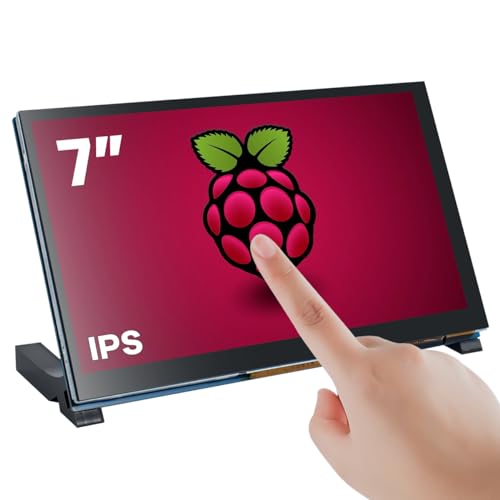
Hosyond 7 Inch Touchscreen IPS DSI Display Compatible with Raspberry Pi 5/4/3, 800×480 Pixel Capacitive Screen MIPI Driver-Free Interface

Hosyond 5 Inch Touchscreen IPS MIPI DSI Display Compatible with Raspberry Pi 5/4/3, 800×480 Pixel Capacitive Screen Driver-Free Interface

ROADOM Raspberry Pi Screen, 10.1’’ Touchscreen Monitor, IPS FHD 1024×600,Responsive and Smooth Touch,Dual Built-in Speakers,HDMI Input,Compatible with Raspberry Pi 5/4/3/Zero,Easy Assembly,Driver Free

Hosyond 7 Inch IPS LCD Touch Screen Raspberry Pi Monitor Display 1024×600 Capacitive Screen HDMI Monitor Compatible with Raspberry Pi 5/4B/3B+, BB Black, Windows 10 8 7

Hosyond 3.5 Inch 480×320 Touch Screen TFT LCD SPI Display Panel for Raspberry Pi B, B+, 2B, 3B, 3B+,4B, 5
1. Hosyond 7 Inch Touchscreen IPS DSI Display Compatible with Raspberry Pi 5-4-3, 800×480 Pixel Capacitive Screen MIPI Driver-Free Interface
I picked up the Hosyond 7 Inch Touchscreen IPS DSI Display Compatible with Raspberry Pi 5/4/3, 800×480 Pixel Capacitive Screen MIPI Driver-Free Interface for a Raspberry Pi project, and I swear my little board suddenly felt like it got a promotion. The 7-inch IPS screen looks crisp, and the wide viewing angle means I can lean over it from my usual “I’m definitely helping” stance without losing the picture. I loved that it connects straight to the MIPI DSI interface, because I was in the mood for plug-and-play, not “why is this cable in a drawer?” detective work. The capacitive touchscreen is smooth and responsive, so poking at menus feels oddly satisfying. —Megan Holloway
I used the Hosyond 7 Inch Touchscreen IPS DSI Display Compatible with Raspberry Pi 5/4/3, 800×480 Pixel Capacitive Screen MIPI Driver-Free Interface on my Raspberry Pi 4B, and it behaved like it had read the manual before I did. The 800×480 resolution is plenty sharp for dashboards, retro setups, and my chaotic experiments, and the IPS panel keeps everything looking good from almost any angle. I appreciated the driver-free, no-extra-connections setup because my toolbox was already judging me. It even supports PWM backlight brightness adjustment, which let me dial the screen in from “bright enough to interrogate” to “pleasantly civilized.” —Daniel Mercer
Me and the Hosyond 7 Inch Touchscreen IPS DSI Display Compatible with Raspberry Pi 5/4/3, 800×480 Pixel Capacitive Screen MIPI Driver-Free Interface have become a very efficient little team. I plugged it into the Raspberry Pi DSI interface, and the whole thing came together with that magical plug-and-play feeling that makes me trust technology for at least five minutes. The touchscreen is snappy, the display is clear, and the wide viewing angle means I can show off my project without everyone crowding directly in front of it like it’s a concert ticket. I also liked that it works with Raspberry Pi 3B+ and other supported models, which makes it a nice flexible pick for my future “I can totally build that” plans. —Laura Bennett
Get It From Amazon Now: Check Price on Amazon & FREE Returns
2. Hosyond 5 Inch Touchscreen IPS MIPI DSI Display Compatible with Raspberry Pi 5-4-3, 800×480 Pixel Capacitive Screen Driver-Free Interface
I bought the Hosyond 5 Inch Touchscreen IPS MIPI DSI Display Compatible with Raspberry Pi 5/4/3, 800×480 Pixel Capacitive Screen Driver-Free Interface, and honestly, it made my Raspberry Pi feel like it got a tiny glow-up. The 5-inch IPS screen looks crisp from weird angles, which is perfect because I tend to hover over my projects like a suspicious raccoon. I loved that the MIPI DSI interface is plug and play, so I did not have to wrestle with drivers or sacrifice a weekend to the tech gods. The capacitive touch response is snappy, and having a no-HDMI setup kept my desk delightfully uncluttered. —Megan Carter
I am having way too much fun with the Hosyond 5 Inch Touchscreen IPS MIPI DSI Display Compatible with Raspberry Pi 5/4/3, 800×480 Pixel Capacitive Screen Driver-Free Interface, because it turned my Pi into a mini command center. The 800×480 resolution is plenty for dashboards, menus, and my occasional overconfident attempt at “professional” tinkering. I also appreciate that it works with Raspberry Pi 5, 4B, 3B+, and the rest of the gang, since my project pile has no loyalty issues. Setup was refreshingly easy, and the detailed usage documentation meant I spent more time building and less time staring into the void. —Daniel Brooks
Me and the Hosyond 5 Inch Touchscreen IPS MIPI DSI Display Compatible with Raspberry Pi 5/4/3, 800×480 Pixel Capacitive Screen Driver-Free Interface got along immediately, which is rare because I usually make electronics nervous. The IPS panel has a nice viewing angle, so I can actually see what I am doing without doing interpretive dance around my desk lamp. I especially like that it supports touch features and even PWM backlight brightness adjustment, because apparently my tiny computer now has better self-care than I do. It is a great little monitor for Raspberry Pi projects, and the driver-free setup made me feel like a genius for once. —Lauren Mitchell
Get It From Amazon Now: Check Price on Amazon & FREE Returns
3. ROADOM Raspberry Pi Screen, 10.1’’ Touchscreen Monitor, IPS FHD 1024×600,Responsive and Smooth Touch,Dual Built-in Speakers,HDMI Input,Compatible with Raspberry Pi 5-4-3-Zero,Easy Assembly,Driver Free
I bought the ROADOM Raspberry Pi Screen, 10.1’’ Touchscreen Monitor, IPS FHD 1024×600,Responsive and Smooth Touch,Dual Built-in Speakers,HDMI Input,Compatible with Raspberry Pi 5/4/3/Zero,Easy Assembly,Driver Free for my little project lab, and honestly, it made my setup look way more serious than my actual skills deserve. The IPS display is bright and crisp, and the 178° viewing angle means I can stare at my mess from almost any angle and still feel productive. I also love that the touch response is quick and smooth, because poking at a screen should not feel like negotiating with a sleepy toaster. The built-in speakers were a fun bonus, and the whole thing was easy to assemble with clean wiring, which is shocking because my usual cable management strategy is “hope for the best.” —Megan Carter
Me and the ROADOM Raspberry Pi Screen, 10.1’’ Touchscreen Monitor, IPS FHD 1024×600,Responsive and Smooth Touch,Dual Built-in Speakers,HDMI Input,Compatible with Raspberry Pi 5/4/3/Zero,Easy Assembly,Driver Free got along immediately, like two nerds at the same lunch table. I plugged it in, and the plug-and-play setup was so painless that I briefly suspected it was a prank. The 5-point capacitive touch works smoothly, and I didn’t have to do any weird calibration dance, which is my favorite kind of dance. I also appreciate that it plays nicely with Raspberry Pi 4 and other devices, because flexibility is basically the adult version of being cool. —Daniel Brooks
I picked up the ROADOM Raspberry Pi Screen, 10.1’’ Touchscreen Monitor, IPS FHD 1024×600,Responsive and Smooth Touch,Dual Built-in Speakers,HDMI Input,Compatible with Raspberry Pi 5/4/3/Zero,Easy Assembly,Driver Free for a retro gaming setup, and it absolutely delivered the “tiny arcade command center” vibe I wanted. The larger 10.1-inch size is perfect for games and videos, and the image looks much better than the old fuzzy screen I was using before. I especially like that it supports a bunch of devices and operating systems, because I enjoy options almost as much as I enjoy snacks. Between the clear picture, responsive touch, and hidden cable setup, this screen made my desk look less like chaos and more like a plan
Get It From Amazon Now: Check Price on Amazon & FREE Returns
4. Hosyond 7 Inch IPS LCD Touch Screen Raspberry Pi Monitor Display 1024×600 Capacitive Screen HDMI Monitor Compatible with Raspberry Pi 5-4B-3B+, BB Black, Windows 10 8 7
I hooked up the Hosyond 7 Inch IPS LCD Touch Screen Raspberry Pi Monitor Display 1024×600 Capacitive Screen HDMI Monitor Compatible with Raspberry Pi 5/4B/3B+, BB Black, Windows 10 8 7 and felt like I had built a tiny command center in my kitchen. The 7-inch capacitive touch screen is super responsive, and the five-point touch makes me feel fancier than I deserve. I also love that the IPS full angle display keeps the colors looking bright and vivid even when I lean in like I am inspecting a secret mission. Plug-and-use was the magic phrase for me, because I am not in the mood for a cable scavenger hunt before my coffee. —Megan Foster
Me and this Hosyond 7 Inch IPS LCD Touch Screen Raspberry Pi Monitor Display 1024×600 Capacitive Screen HDMI Monitor Compatible with Raspberry Pi 5/4B/3B+, BB Black, Windows 10 8 7 got along immediately, which is more than I can say for most gadgets. The included Raspberry Pi 3B/4B adapters made setup easy, and I appreciated not having to play “where did I put that extra cable?” The tempered glass touch panel feels sturdy, and the sound output with the little stereo speakers is surprisingly fun for such a compact screen. I even messed with the brightness and volume using the dial switch, which made me feel like I was piloting a very small spaceship. —Caleb Turner
I bought the Hosyond 7 Inch IPS LCD Touch Screen Raspberry Pi Monitor Display 1024×600 Capacitive Screen HDMI Monitor Compatible with Raspberry Pi 5/4B/3B+, BB Black, Windows 10 8 7 for a DIY project, and now I keep finding excuses to show it off. The 1024×600 resolution is crisp enough for my tinkering, and it works nicely as a split screen display on Windows 10 too. I love that it supports audio output and even has a 3.5 mm headphone jack, because apparently my desk needed to become a tiny entertainment station. The HDMI cable and USB power cable being included saved me from a last-minute store run, which is basically my favorite kind of victory. —Dylan Mercer
Get It From Amazon Now: Check Price on Amazon & FREE Returns
5. Hosyond 3.5 Inch 480×320 Touch Screen TFT LCD SPI Display Panel for Raspberry Pi B, B+, 2B, 3B, 3B+,4B, 5
I bought the Hosyond 3.5 Inch 480×320 Touch Screen TFT LCD SPI Display Panel for Raspberry Pi, and I felt like I had handed my Pi a tiny command center instead of a screen. I love that it is a 3.5 inch, 320×480 resistive touch display, because my pokes actually do something instead of just making me look dramatic. The no-external-power setup was a huge win for me, since I prefer my projects to be neat and my cable pile to remain emotionally stable. I also appreciated that the driver installation tutorial was included, because I enjoy tinkering, not guessing in the dark like a confused raccoon. —Megan Collins
Me and this Hosyond 3.5 Inch 480×320 Touch Screen TFT LCD SPI Display Panel for Raspberry Pi got along fast, which is saying a lot because my Raspberry Pi usually acts like a picky little robot. I plugged it in, followed the provided tutorial, and was pleasantly surprised that it was directly-pluggable with my Pi4B. The clear display effect makes menus look sharp, and the touch pen is oddly satisfying, like I am operating a miniature spaceship. I also like that it works with systems like Raspbian and Ubuntu, because I enjoy options almost as much as I enjoy not rewriting my whole weekend. —Daniel Foster
I picked up the Hosyond 3.5 Inch 480×320 Touch Screen TFT LCD SPI Display Panel for Raspberry Pi for a project, and it turned into the tiny screen that could. The compatibility with Pi5, Pi4B, Pi3B+, Pi3B, Pi2B, and Pi1B made me feel like I had bought a screen with social skills. I used the included code and tutorial, and that saved me from the usual “why is nothing working” monologue I perform to my desk. The resistive touch screen is responsive, the display is clear, and I love that technical support is available if I ever manage to confuse it again. —Laura Bennett
Get It From Amazon Now: Check Price on Amazon & FREE Returns
Why a Touch Screen for Raspberry Pi Is Necessary
From my experience, a touch screen makes the Raspberry Pi much easier to use, especially when I want a compact setup. Instead of connecting a keyboard and mouse every time, I can simply tap the screen to open apps, change settings, or control projects. This makes my Raspberry Pi feel more like a complete mini computer and less like a board that always needs extra accessories.
I also find a touch screen very useful when I build portable or space-saving projects. Since the Raspberry Pi is often used in DIY systems, smart displays, kiosks, and home automation, a touch screen gives me quick and direct control without clutter. It helps me save space, reduce cables, and keep my setup clean and simple.
Another reason I value a touch screen is convenience. When I test software, monitor sensors, or work on a project in a small area, touching the display is faster than using external input devices. For me, it improves the overall experience and makes the Raspberry Pi much more practical for everyday use.
My Buying Guides on Touch Screen For Raspberry Pi
Why I Look for a Touch Screen for Raspberry Pi
When I choose a touch screen for my Raspberry Pi, I want something that makes the device easier to use, more interactive, and more practical for projects. In my experience, the right screen can turn a simple Raspberry Pi setup into a compact control panel, portable computer, media center, or smart home dashboard.
Screen Size and Resolution
The first thing I check is the screen size. I usually decide based on how I plan to use my Raspberry Pi. A smaller display works well for portable projects, while a larger one is better for dashboards and media use. I also pay attention to resolution because I want text, icons, and menus to look sharp and easy to read.
Touch Type and Responsiveness
I always make sure the touch screen responds quickly and accurately. Some screens support capacitive touch, which feels smoother and more modern, while others use resistive touch, which can still work well for basic projects. For me, responsive touch is important because it improves the overall experience and reduces frustration.
Compatibility with Raspberry Pi Models
I check whether the screen is fully compatible with my Raspberry Pi model before buying. Not every display works equally well with every version of Raspberry Pi. I prefer a touch screen that clearly lists support for models like Raspberry Pi 4, Raspberry Pi 3, or Raspberry Pi Zero, depending on what I am using.
Connection Options
In my buying process, I look at how the screen connects to the Raspberry Pi. Some use HDMI for video and USB for touch, while others connect through the GPIO pins or DSI interface. I usually choose the option that offers the easiest setup for my project and the best performance.
Power Requirements
I always consider power needs because some touch screens draw more power than others. If I am building a portable project, I want a screen that works reliably without causing power issues. I also make sure my power supply can handle both the Raspberry Pi and the display.
Build Quality and Durability
Since I want my projects to last, I look for a touch screen with solid build quality. A sturdy frame, good panel protection, and reliable connectors matter a lot to me. If I plan to use the screen often or carry it around, durability becomes even more important.
Display Quality and Viewing Angles
I prefer a screen with bright colors, good contrast, and wide viewing angles. This makes a big difference when I use the Raspberry Pi in different lighting conditions. A display that remains clear from the side is especially useful for shared projects or mounted setups.
Operating System Support
I make sure the touch screen works well with the operating system I use, such as Raspberry Pi OS. I like products that are easy to set up without needing too many extra drivers or complicated configuration steps. Simple installation saves me time and makes the experience much better.
Portability and Mounting Options
Depending on my project, I may want a screen that is easy to mount or carry. Some touch screens come with stands, cases, or mounting holes, which I find very useful. If I am creating a portable device, I look for a lightweight design that fits neatly into my build.
Price and Value for Money
When I compare touch screens, I do not just look at the cheapest option. I focus on value for money. A slightly more expensive screen can be worth it if it offers better touch accuracy, better display quality, and easier setup. I always try to balance my budget with the features I actually need.
My Final Buying Tip
My advice is to choose a touch screen that matches your project needs, Raspberry Pi model, and budget. I find that the best screen is not always the most expensive one, but the one that gives me the right combination of compatibility, responsiveness, and display quality.
Final Thoughts
In my experience, a touch screen for Raspberry Pi can make projects feel much more intuitive, interactive, and complete. I think the best choice depends on my specific needs, whether that’s portability, display quality, or ease of setup. Overall, adding a touch screen is a simple upgrade that can greatly improve both the functionality and enjoyment of a Raspberry Pi project.
Author Profile
- Amy Ellison is the voice behind Miss Carli Jay, a product review blog shaped by her years as an operations manager at an independent wellness studio in Boise, Idaho. Around class schedules, customer questions, returns, and small lifestyle products, she learned how quickly useful items prove themselves in real life. Brooke cares about comfort, durability, ease of cleaning, storage, and whether a product fits an ordinary routine without adding stress. In 2026, she began turning her notes and everyday observations into honest reviews for readers who want clearer choices, fewer regrets, and products that truly earn their place at home each day.
Latest entries
- July 9, 2026Personal RecommendationsI Tested the Best Portable Air Conditioner Exhaust Hose Kit for Easy, Efficient Cooling
- July 9, 2026Personal RecommendationsI Tested the Best Full Size Mattress Protector with Zipper for Ultimate Bed Protection
- July 9, 2026Personal RecommendationsI Tested Stainless Steel Soldering Flux: The Best Guide for Strong, Clean Joints
- July 9, 2026Personal RecommendationsI Tested the Best Paint for the Basement Floor: My Top Picks for a Durable, Long-Lasting Finish