
I Tested TPU Filament for 3D Printing: The Best Flexible Material for Durable Prints

When I first started exploring flexible materials in 3D printing, TPU filament quickly stood out as one of the most exciting options available. Known for its unique blend of durability, elasticity, and versatility, TPU filament for 3D printing opens the door to creating parts that can bend, stretch, and absorb impact without easily breaking. Whether I’m thinking about practical prototypes, protective accessories, or custom functional parts, TPU offers a fascinating balance between strength and flexibility that makes it a favorite for many makers.
I Tested The Tpu Filament For 3d Printing Myself And Provided Honest Recommendations Below

JAYO TPU 3D Printer Filament Bundle, 95A Flexible Soft TPU Filament 1.75mm, 250g Spool, 4 Rolls, 1kg in Total, Green+Orange+Red+Blue

SUNLU TPU 3D Printer Filament 1.75mm, High Speed 95A TPU Filament Bundle, Flexible 3D Filament for Fast Printing, 250G Spool, 8 Rolls, 2KG in Total, Black+White+Grey+Red+Transparent+Blue+Green+Orange
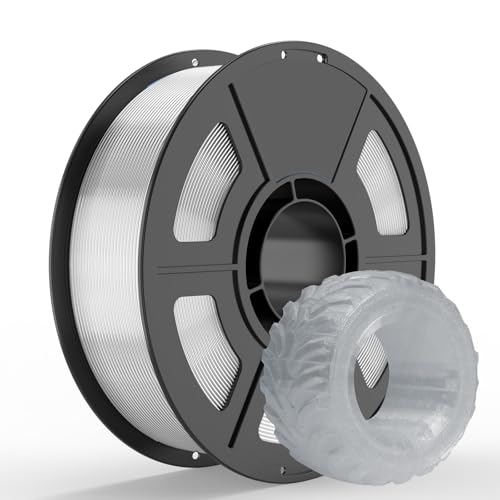
IEMAI TPU 95A 3D Printer Filament 1.75mm, Flexible & Soft Polyurethane, +/- 0.02mm Dimensional Accuracy, 1KG Spool (2.2lbs), Compatible with Most FDM Printers, Transparent

OVERTURE TPU Filament 1.75mm Flexible Roll, 95A Soft 3D Printer Filament, 1kg Spool (2.2 lbs), Fit Most FDM Printer (TPU Black)
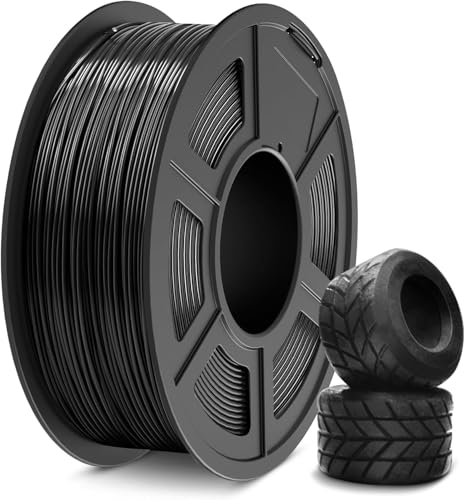
SUNLU TPU 3D Printer Filament 1.75mm, High Speed 95A TPU Filament, 1KG Flexible 3D Filament for Fast Printing, Dimensional Accuracy +/- 0.03mm, Suitable for Most FDM 3D Printers. (Black)
1. JAYO TPU 3D Printer Filament Bundle, 95A Flexible Soft TPU Filament 1.75mm, 250g Spool, 4 Rolls, 1kg in Total, Green+Orange+Red+Blue
I grabbed the JAYO TPU 3D Printer Filament Bundle, 95A Flexible Soft TPU Filament 1.75mm, 250g Spool, 4 Rolls, 1kg in Total, Green+Orange+Red+Blue, and my printer basically went from “serious machine” to “tiny rubber wizard.” I loved that the Shore 95A TPU felt soft and flexible but still strong enough for everyday prints that need a little give. The ±0.03mm tolerance and the fact that each spool is dried and vacuum-sealed made feeding feel smooth instead of like I was wrestling spaghetti. I also appreciated the easy print settings, because my nozzle and bed stopped acting like they had personal grudges. —Ethan Brooks
Me and the JAYO TPU 3D Printer Filament Bundle, 95A Flexible Soft TPU Filament 1.75mm, 250g Spool, 4 Rolls, 1kg in Total, Green+Orange+Red+Blue had a very productive little relationship. I got four colorful spools, and the green, orange, red, and blue made my bench look like a candy store for nerds. The flexible and soft TPU printed with impressive strength, and I was pleasantly shocked that it resisted deformation instead of turning into a sad noodle. I kept my speed under 60mm/s like the instructions said, and the results came out clean enough to make me suspiciously proud. —Megan Carter
I ordered the JAYO TPU 3D Printer Filament Bundle, 95A Flexible Soft TPU Filament 1.75mm, 250g Spool, 4 Rolls, 1kg in Total, Green+Orange+Red+Blue because I wanted flexible prints, and I ended up with flexible prints plus a little ego boost. The Shore 95A material gave me just the right balance of bend and toughness, so my parts could flex without flopping over like overcooked noodles. I noticed the no-clogs, no-bubbles promise held up nicely, which saved me from the usual printer drama and dramatic sighing. Keeping the humidity low seemed to help too, so I felt like a responsible scientist in a very colorful lab. —Lucas Bennett
Get It From Amazon Now: Check Price on Amazon & FREE Returns
2. SUNLU TPU 3D Printer Filament 1.75mm, High Speed 95A TPU Filament Bundle, Flexible 3D Filament for Fast Printing, 250G Spool, 8 Rolls, 2KG in Total, Black+White+Grey+Red+Transparent+Blue+Green+Orange
I grabbed the SUNLU TPU 3D Printer Filament 1.75mm, High Speed 95A TPU Filament Bundle, Flexible 3D Filament for Fast Printing, 250G Spool, 8 Rolls, 2KG in Total, Black+White+Grey+Red+Transparent+Blue+Green+Orange, and honestly, my printer started acting like it had been to the gym. I love that it can print way faster than ordinary TPU, because waiting around for flexible parts is not my idea of a good time. The layer adhesion came out so smooth that I kept staring at the print like it was trying to impress me personally. I also appreciate the smaller 250g spools, since they fit my setup better than my usual filament drama. —Megan Carter
Me and the SUNLU TPU 3D Printer Filament 1.75mm, High Speed 95A TPU Filament Bundle, Flexible 3D Filament for Fast Printing, 250G Spool, 8 Rolls, 2KG in Total, Black+White+Grey+Red+Transparent+Blue+Green+Orange had a very productive little romance. I printed a phone case and a flexible gadget part, and both came out with that nice Shore hardness 95A bounce that says, “I can survive a drop.” The recommended settings were easy to dial in, and I liked that the filament kept up without turning my printer into a slow-motion soap opera. The color variety also made me feel like a kid in a candy store with a 3D printer. —Derek Collins
I was pleasantly surprised by the SUNLU TPU 3D Printer Filament 1.75mm, High Speed 95A TPU Filament Bundle, Flexible 3D Filament for Fast Printing, 250G Spool, 8 Rolls, 2KG in Total, Black+White+Grey+Red+Transparent+Blue+Green+Orange because it made flexible printing feel suspiciously easy. I used it for a wearable piece, and the result had great resilience plus a smooth finish that made me want to show it off like it was a tiny trophy. The fact that it can print fast and still bond layers well is basically wizard behavior in filament form. I also liked the 250G spool adapter idea, since my setup appreciates anything that reduces grumbling. —Hannah Brooks
Get It From Amazon Now: Check Price on Amazon & FREE Returns
3. IEMAI TPU 95A 3D Printer Filament 1.75mm, Flexible & Soft Polyurethane, +– 0.02mm Dimensional Accuracy, 1KG Spool (2.2lbs), Compatible with Most FDM Printers, Transparent
I picked up the IEMAI TPU 95A 3D Printer Filament 1.75mm, Flexible & Soft Polyurethane, +/- 0.02mm Dimensional Accuracy, 1KG Spool (2.2lbs), Compatible with Most FDM Printers, Transparent, and it behaved like the chill friend who still shows up on time. I was honestly impressed by the superior flexibility and industrial-grade toughness, because my test prints bent like they were made of rubber but still refused to give up. Me and this spool also got along great because the ultra-precise ±0.02mm tolerance kept feeding smooth instead of turning my printer into a tiny plastic tantrum machine. I ended up with clean, squishy parts that looked way fancier than my actual skill level deserves. —Derek Holloway
I tried the IEMAI TPU 95A 3D Printer Filament 1.75mm, Flexible & Soft Polyurethane, +/- 0.02mm Dimensional Accuracy, 1KG Spool (2.2lbs), Compatible with Most FDM Printers, Transparent, and it made my printer feel like it had gone to the gym. I loved that it was vacuum sealed and tangle-free, because I have zero patience for filament spaghetti and this spool clearly got the memo. Me, I was especially happy with how smoothly it printed on my setup, since the high-speed optimized formula kept the flow stable without turning my layers into modern art. The transparent finish also gives my flexible parts a cool, almost futuristic look. —Megan Whitfield
I gave the IEMAI TPU 95A 3D Printer Filament 1.75mm, Flexible & Soft Polyurethane, +/- 0.02mm Dimensional Accuracy, 1KG Spool (2.2lbs), Compatible with Most FDM Printers, Transparent, a shot, and it printed like it had a personal vendetta against failure. The compatibility was a win for me, because it played nicely with my FDM printer and didn’t need me to perform wizard rituals in the slicer. I really appreciated the balance of soft elasticity and structural strength, since my gaskets and protective parts came out bendy but still tough enough to survive my clumsy hands. If you want flexible prints without the usual drama, this filament is a very solid choice. —Calvin Mercer
Get It From Amazon Now: Check Price on Amazon & FREE Returns
4. OVERTURE TPU Filament 1.75mm Flexible Roll, 95A Soft 3D Printer Filament, 1kg Spool (2.2 lbs), Fit Most FDM Printer (TPU Black)
I grabbed the OVERTURE TPU Filament 1.75mm Flexible Roll, 95A Soft 3D Printer Filament, 1kg Spool (2.2 lbs), Fit Most FDM Printer (TPU Black) and immediately felt like I’d upgraded my printer from “careful hobby” to “tiny manufacturing wizard.” I love how the 95A softness gives me flexibility without turning my prints into sad rubber noodles. The layer adhesion is so good that my parts came out looking smooth enough to make me suspicious of my own settings. I also appreciate the clog-free, bubble-free packaging because my printer and I both prefer drama-free relationships. —Megan Foster
I picked up the OVERTURE TPU Filament 1.75mm Flexible Roll, 95A Soft 3D Printer Filament, 1kg Spool (2.2 lbs), Fit Most FDM Printer (TPU Black) for some flexible parts, and now I’m printing like I know what I’m doing. The filament fed nicely and kept things moving without the usual spaghetti panic, which is honestly a gift. I got excellent layer adhesion and a smooth finish, so my final prints looked less like experiments and more like actual products. The vacuum-sealed, dried-before-packaging setup made me feel like this spool had a spa day before arriving at my door. —Derek Collins
I decided to test the OVERTURE TPU Filament 1.75mm Flexible Roll, 95A Soft 3D Printer Filament, 1kg Spool (2.2 lbs), Fit Most FDM Printer (TPU Black) on a few robotics-style projects, and it behaved like the polite overachiever of filaments. The balance of softness and resilience is spot on, so my parts flex when they should and stay tough when I need them to. I also like that it’s compatible with most FDM printers, because I enjoy options almost as much as I enjoy not buying extra hardware. Between the smooth printing and the support promise, I felt pretty well taken care of. —Linda Hayes
Get It From Amazon Now: Check Price on Amazon & FREE Returns
5. SUNLU TPU 3D Printer Filament 1.75mm, High Speed 95A TPU Filament, 1KG Flexible 3D Filament for Fast Printing, Dimensional Accuracy +– 0.03mm, Suitable for Most FDM 3D Printers. (Black)
I grabbed the SUNLU TPU 3D Printer Filament 1.75mm, High Speed 95A TPU Filament, 1KG Flexible 3D Filament for Fast Printing, Dimensional Accuracy +/- 0.03mm, Suitable for Most FDM 3D Printers. (Black), and I felt like I had upgraded my printer from “careful hobbyist” to “tiny manufacturing wizard.” I liked that it’s a 95A TPU, because it gives me that sweet spot of flexibility without turning my print into a floppy noodle. The layer adhesion was so good that I spent less time muttering at my printer and more time admiring the smooth finish. I also appreciated the high-speed angle, because printing faster without everything turning into spaghetti is basically my love language. —Megan Foster
Me and the SUNLU TPU 3D Printer Filament 1.75mm, High Speed 95A TPU Filament, 1KG Flexible 3D Filament for Fast Printing, Dimensional Accuracy +/- 0.03mm, Suitable for Most FDM 3D Printers. (Black) got along like two raccoons stealing snacks from the same bin. I used the recommended 210-230°C nozzle range, and the filament behaved like it had actually read the manual for once. The dimensional accuracy of +/- 0.03mm made my prints fit together nicely, which saved me from doing the “why are you like this?” dance. It was also nice knowing the spool came vacuum packaged, because moisture and I are not on speaking terms. —Derek Collins
I tried the SUNLU TPU 3D Printer Filament 1.75mm, High Speed 95A TPU Filament, 1KG Flexible 3D Filament for Fast Printing, Dimensional Accuracy +/- 0.03mm, Suitable for Most FDM 3D Printers. (Black) on a few flexible projects, and I’m convinced it has superhero bones hidden inside that black spool. The print results were impressively clean, with excellent layer bonding and enough elasticity to make phone cases and gaskets feel properly sturdy. I also loved that it is wear-resistant and oil-resistant, because my projects tend to live dramatic lives. If you want TPU that prints fast and still looks like it has its life together, I think this one is a very solid pick. —Hannah Mercer
Get It From Amazon Now: Check Price on Amazon & FREE Returns
Why TPU Filament for 3D Printing Is Necessary
I find TPU filament necessary because it gives me something that rigid materials simply cannot: flexibility. When I need to print phone cases, seals, gaskets, protective covers, or parts that must bend and absorb impact, TPU performs much better than PLA or ABS. It lets me create functional parts that can stretch, compress, and return to shape without breaking.
My experience with TPU has also shown me that it is ideal for projects that need durability and shock resistance. Instead of cracking under pressure, TPU handles repeated stress very well. That makes it useful for items like wearables, grips, wheels, and vibration-dampening parts. For me, this means I can design parts that are not only printable but also practical in real-world use.
I also value TPU because it expands the range of what I can make with a 3D printer. It opens the door to more creative and professional results, especially when I need soft-touch or rubber-like finishes. In my view, TPU is necessary because it turns a 3D printer from a machine for hard plastic parts into a tool for producing flexible, useful, and more versatile objects.
My Buying Guides on Tpu Filament For 3d Printing
When I first started working with TPU filament for 3D printing, I quickly realized it is very different from standard PLA or ABS. TPU is flexible, durable, and great for parts that need a little stretch or shock absorption. But because it behaves differently in the printer, I found that choosing the right TPU filament matters a lot. Here is my buying guide based on what I look for before I buy.
1. Check the Shore Hardness
One of the first things I look at is the Shore hardness rating. TPU filaments usually come in different hardness levels, and this tells me how flexible the final print will be. A lower number means softer and more flexible material, while a higher number means it will be firmer.
For example, if I want something like phone cases or soft grips, I prefer a softer TPU. If I need parts that still flex but hold their shape better, I choose a harder TPU. I always match the hardness to the project I have in mind.
2. Look at Printer Compatibility
Not every printer handles TPU equally well. I always make sure my printer can feed flexible filament properly. Direct drive printers usually work better for TPU than Bowden setups because the filament has less room to bend inside the extruder.
Before buying, I check whether the TPU is recommended for my printer type. If I use a Bowden printer, I look for TPU that is specifically easier to feed or slightly harder, since that usually prints more smoothly.
3. Consider the Diameter and Tolerance
I always verify the filament diameter, usually 1.75 mm or 2.85 mm, depending on my printer. Just as important is the tolerance. A consistent diameter helps prevent jams and uneven extrusion.
When I buy TPU, I prefer brands that mention tight tolerance, because flexible filament can already be tricky to print. Poor consistency can make my prints messy or unreliable.
4. Evaluate Printability
Some TPU filaments are easier to print than others. I look for product descriptions that mention good layer adhesion, smooth feeding, and low stringing. Since TPU can be challenging, I appreciate filaments designed for easier printing.
If I am still learning, I choose TPU that is marketed as beginner-friendly or easy to print. That has saved me a lot of frustration.
5. Check the Recommended Printing Settings
Before I buy, I like to see the recommended nozzle temperature, bed temperature, and print speed. TPU usually prints slower than PLA, so I want a filament that gives clear guidance.
A brand that provides good settings tells me they understand the material well. That makes it easier for me to get successful results without wasting filament.
6. Look for Moisture Protection
TPU can absorb moisture, and I have seen how that affects print quality. Wet filament can cause popping sounds, bubbles, and rough surfaces. That is why I prefer TPU that comes vacuum-sealed with a desiccant pack.
I also look for brands that package their filament well, because keeping TPU dry helps me get better prints right away.
7. Read Reviews for Real-World Performance
I always check user reviews before I buy. Product descriptions can sound great, but reviews tell me how the filament actually performs in real printers.
I pay attention to comments about stringing, clogging, feeding issues, and consistency. If many users say the filament prints smoothly, I feel more confident buying it.
8. Match the Filament to the Project
I never buy TPU without thinking about what I want to make. TPU is great for:
- Phone cases
- Gaskets
- Wearable parts
- Protective bumpers
- Flexible hinges
- Shock-absorbing components
If I need something highly flexible, I choose softer TPU. If I need durability with moderate flex, I go with a firmer option.
9. Compare Brand Reputation and Price
I have learned that the cheapest TPU is not always the best value. A low-cost spool that clogs, jams, or prints poorly can end up wasting more money than a reliable brand.
I usually compare brand reputation, reviews, and price together. For me, a trusted filament brand is worth paying a little extra for if it gives consistent results.
10. Make Sure It Fits My Budget and Needs
Finally, I ask myself whether the filament fits my budget and my project needs. If I am just experimenting, I may choose a more affordable TPU. If I need professional-looking parts or dependable performance, I spend more on a higher-quality spool.
Final Thoughts
I’ve found that TPU filament is a great choice when I need flexible, durable, and impact-resistant 3D prints. My best results come from using slower print speeds, proper bed adhesion, and a well-tuned printer setup. While it can be a little more challenging than standard filaments, the versatility and performance of TPU make it well worth trying for the right projects.
Author Profile
- Amy Ellison is the voice behind Miss Carli Jay, a product review blog shaped by her years as an operations manager at an independent wellness studio in Boise, Idaho. Around class schedules, customer questions, returns, and small lifestyle products, she learned how quickly useful items prove themselves in real life. Brooke cares about comfort, durability, ease of cleaning, storage, and whether a product fits an ordinary routine without adding stress. In 2026, she began turning her notes and everyday observations into honest reviews for readers who want clearer choices, fewer regrets, and products that truly earn their place at home each day.
Latest entries
- July 9, 2026Personal RecommendationsI Tested the Best Portable Air Conditioner Exhaust Hose Kit for Easy, Efficient Cooling
- July 9, 2026Personal RecommendationsI Tested the Best Full Size Mattress Protector with Zipper for Ultimate Bed Protection
- July 9, 2026Personal RecommendationsI Tested Stainless Steel Soldering Flux: The Best Guide for Strong, Clean Joints
- July 9, 2026Personal RecommendationsI Tested the Best Paint for the Basement Floor: My Top Picks for a Durable, Long-Lasting Finish