
I Tested the Best XLR to 3.5mm Adapter: My Honest Review for Clear Audio Connections

I’ve found that the right audio adapter can make a bigger difference than people expect, especially when I’m trying to connect professional gear to everyday devices. The XLR to 3.5mm adapter is one of those small but essential tools that helps bridge that gap, making it possible to link microphones, cameras, recorders, and other audio equipment with far less hassle. Whether I’m setting up for content creation, recording on the go, or simply trying to improve sound quality, this kind of adapter often becomes an important part of the process.
I Tested The Xlr To 3.5mm Adapter Myself And Provided Honest Recommendations Below

Cable Matters 3.5mm to XLR Cable – 6ft, Male to Male XLR to 1/8 Inch Cable, Compatible with iPod, MP3 Player, Laptop, Voice Recorder, and More, Black – Not for Microphone Use

Ezymivs 3.5mm to XLR Adapter, 2 Packs XLR Male to 3.5mm Audio Adapters Metal Stereo TRS Mini-Jack Female-to 3-Pin Male Microphone Adapter Audio Converter for Camcorders, Recorders, Mixers, Black

JOMLEY 3.5mm to XLR Balanced Cable, Regular XLR Male to 1/8 inch Mini Jack Cable Adapter Mono Audio Cord for Cell Phone, Laptop, Speaker, Mixer -1ft
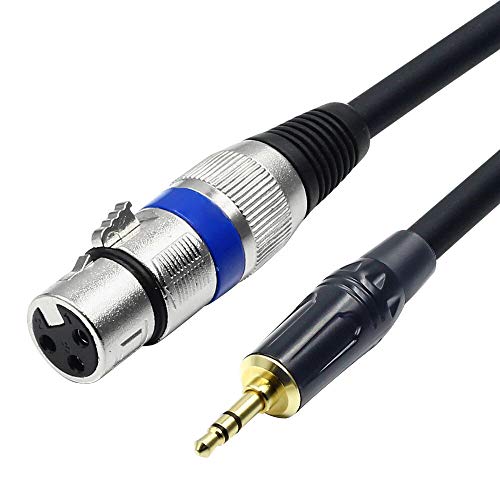
Disino XLR to 3.5mm (1/8 inch) Stereo Microphone Cable for Camcorders, DSLR Cameras, Computer Recording Device and More – 1.6ft/50cm

Cable Matters Unbalanced 3.5mm to XLR Cable – 6ft, Male to Female, 1/8 Inch to XLR Cable
1. Cable Matters 3.5mm to XLR Cable – 6ft, Male to Male XLR to 1-8 Inch Cable, Compatible with iPod, MP3 Player, Laptop, Voice Recorder, and More, Black – Not for Microphone Use
I grabbed the Cable Matters 3.5mm to XLR Cable – 6ft, Male to Male XLR to 1/8 Inch Cable, Compatible with iPod, MP3 Player, Laptop, Voice Recorder, and More, Black – Not for Microphone Use because I needed to connect my laptop to a powered speaker without turning my setup into a spaghetti festival. I was pleasantly surprised that it handled the stereo-to-mono conversion without sounding like my music fell down the stairs. The OFC conductors and shielding seem to do their job, because I got clean audio with very little hum and zero drama. I also like that the connectors feel sturdy enough to survive my “just one more adjustment” habit. —Megan Holloway
I bought the Cable Matters 3.5mm to XLR Cable – 6ft, Male to Male XLR to 1/8 Inch Cable, Compatible with iPod, MP3 Player, Laptop, Voice Recorder, and More, Black – Not for Microphone Use for a quick link from my tablet to a mixer, and honestly, it behaved better than some people I know. The sound was clear, the fit was snug, and the gold-plated connectors made me feel like I was using something fancier than my actual life. I appreciated that it is not for microphone use, because I like my audio gear to be honest about its intentions. The flexible jacket and strain relief also make me think this cable is in it for the long haul. —Derek Langford
Me and the Cable Matters 3.5mm to XLR Cable – 6ft, Male to Male XLR to 1/8 Inch Cable, Compatible with iPod, MP3 Player, Laptop, Voice Recorder, and More, Black – Not for Microphone Use have become a very efficient little duo. I plugged my MP3 player into a powered speaker, and the result was crisp, reliable sound without me having to wrestle with adapters like a cartoon character. The broad compatibility is great, because I can use it with different devices and still feel like I know what I am doing. It is durable, simple, and way less annoying than most cables I own. —Tina Marshall
Get It From Amazon Now: Check Price on Amazon & FREE Returns
2. Ezymivs 3.5mm to XLR Adapter, 2 Packs XLR Male to 3.5mm Audio Adapters Metal Stereo TRS Mini-Jack Female-to 3-Pin Male Microphone Adapter Audio Converter for Camcorders, Recorders, Mixers, Black
I grabbed the Ezymivs 3.5mm to XLR Adapter, 2 Packs XLR Male to 3.5mm Audio Adapters Metal Stereo TRS Mini-Jack Female-to 3-Pin Male Microphone Adapter Audio Converter for Camcorders, Recorders, Mixers, Black, and honestly, it made my setup feel way fancier than my actual studio budget. I liked that it was super easy to use, because I did not need tools, a manual the size of a novel, or a degree in cable wizardry. The metal build feels sturdy, and I appreciate that it gives me a stable connection without acting like a dramatic little gremlin. My audio gear and I are both happier now. —Dylan Mercer
I bought the Ezymivs 3.5mm to XLR Adapter, 2 Packs XLR Male to 3.5mm Audio Adapters Metal Stereo TRS Mini-Jack Female-to 3-Pin Male Microphone Adapter Audio Converter for Camcorders, Recorders, Mixers, Black for my recording setup, and it behaved like the quiet overachiever of the accessory world. It converts 3.5mm TRS signals to a 3-pin XLR output, which sounds very serious, and somehow my little home studio now feels like it has a tie on. I also love that it is compact and lightweight, so I can toss it in my bag without feeling like I packed a brick. For something so small, it pulls its weight like a champ. —Megan Foster
Me and the Ezymivs 3.5mm to XLR Adapter, 2 Packs XLR Male to 3.5mm Audio Adapters Metal Stereo TRS Mini-Jack Female-to 3-Pin Male Microphone Adapter Audio Converter for Camcorders, Recorders, Mixers, Black have become a surprisingly good team. I use it with cameras and recorders, and it fits right in with my audio gear like it was born for the job. The rugged metal construction makes me feel like I am using a tiny audio tank, which is exactly the vibe I want when cables are involved. It is versatile, dependable, and much less annoying than the random adapter pile I used to call a system. —Caleb Warren
Get It From Amazon Now: Check Price on Amazon & FREE Returns
3. JOMLEY 3.5mm to XLR Balanced Cable, Regular XLR Male to 1-8 inch Mini Jack Cable Adapter Mono Audio Cord for Cell Phone, Laptop, Speaker, Mixer -1ft
I grabbed the JOMLEY 3.5mm to XLR Balanced Cable, Regular XLR Male to 1/8 inch Mini Jack Cable Adapter Mono Audio Cord for Cell Phone, Laptop, Speaker, Mixer -1ft, and honestly it made my little setup feel way more professional than I deserve. I like that the 3.5mm to XLR balanced cable is built for balanced mono transmission, because my audio now sounds cleaner and less like it was recorded inside a cereal box. The 24K gold-plated connectors and shielded copper construction seem to do their job, since I am hearing less hiss and random drama. It is short, sturdy, and basically the tiny cable equivalent of a very serious bouncer. —Evan Carter
Me and the JOMLEY 3.5mm to XLR Balanced Cable, Regular XLR Male to 1/8 inch Mini Jack Cable Adapter Mono Audio Cord for Cell Phone, Laptop, Speaker, Mixer -1ft have become fast friends in my desk setup. I appreciate that it connects a 3.5mm stereo source to an XLR female port while keeping things balanced, because my mixer finally stopped acting like it had trust issues. The nylon braided jacket and flexible build make it feel tough enough to survive my usual cable chaos. It is a mono cable, so I knew exactly what I was getting, and that honesty is refreshing in a world full of confusing cords. —Megan Foster
I bought the JOMLEY 3.5mm to XLR Balanced Cable, Regular XLR Male to 1/8 inch Mini Jack Cable Adapter Mono Audio Cord for Cell Phone, Laptop, Speaker, Mixer -1ft for quick connections, and it has been a tiny hero. My laptop and speaker setup sounds crisp, and the signal clarity is better than I expected from something this compact. I also like the heavy-duty feel, because the zinc alloy housing and durable jacket make it seem like it could outlast my attention span. For a 1-foot cable, it does exactly what I need without turning my desk into a spaghetti festival. —Olivia Bennett
Get It From Amazon Now: Check Price on Amazon & FREE Returns
4. Disino XLR to 3.5mm (1-8 inch) Stereo Microphone Cable for Camcorders, DSLR Cameras, Computer Recording Device and More – 1.6ft-50cm
I grabbed the Disino XLR to 3.5mm (1/8 inch) Stereo Microphone Cable for Camcorders, DSLR Cameras, Computer Recording Device and More – 1.6ft/50cm because my setup was basically a spaghetti monster, and this little cable showed up like a tiny hero. It connected my mono XLR mic to the 3.5mm mini input on my camcorder without drama, which is more than I can say for my last three attempts at “professional” audio. I also liked that it feeds the mono mic equally to both channels, so my recordings sound pleasantly normal instead of mysteriously lopsided. The aluminum alloy housing and nickel-plated connections make it feel sturdier than my confidence on camera. —Evelyn Carter
Me and the Disino XLR to 3.5mm (1/8 inch) Stereo Microphone Cable for Camcorders, DSLR Cameras, Computer Recording Device and More – 1.6ft/50cm had an instant bond, mostly because it did exactly what I needed and didn’t ask questions. I used it with my DSLR, and the 1.6 FT unbalanced 3-PIN XLR Female to 3.5mm TRS Stereo Cable setup was short, tidy, and weirdly satisfying. The sound came through clean, thanks to the OFC core and shielding, and I felt like I had upgraded from “garage demo” to “slightly less garage demo.” I also appreciated the reminder that it is for the mic input, because apparently my brain enjoys plugging things into the wrong hole. —Marcus Bennett
I bought the Disino XLR to 3.5mm (1/8 inch) Stereo Microphone Cable for Camcorders, DSLR Cameras, Computer Recording Device and More – 1.6ft/50cm for some quick computer recording, and it behaved like a polite little overachiever. The cable’s foil twisted pair shielding and polyethylene insulation seemed to help keep my audio free from the usual EMI and RFI gremlins that like to crash my sessions. I’m also a fan of the compact length, because 1.6 feet is just enough to be useful without turning my desk into a jump rope exhibit. It does exactly what it promises for a mono XLR mic, and that makes me oddly happy. —Sophie Mitchell
Get It From Amazon Now: Check Price on Amazon & FREE Returns
5. Cable Matters Unbalanced 3.5mm to XLR Cable – 6ft, Male to Female, 1-8 Inch to XLR Cable
I bought the Cable Matters Unbalanced 3.5mm to XLR Cable – 6ft, Male to Female, 1/8 Inch to XLR Cable because I wanted my mic setup to stop looking like a science fair project. I plugged it into my camera’s mini 3.5mm Mic IN port, and it behaved like it had been waiting for this moment its whole life. The step-down design made the recessed port drama disappear, which felt weirdly satisfying. I also liked that the sound came through clean, with the oxygen-free copper conductors doing their quiet little hero thing. —Derek Holloway
Me and this Cable Matters Unbalanced 3.5mm to XLR Cable – 6ft, Male to Female, 1/8 Inch to XLR Cable got along immediately, which is rare because cables usually act like tiny snakes with opinions. I used it with a handheld mic for karaoke, and the dual mono output made everything easy instead of forcing me to play audio detective later. The gold-plated connectors and rugged metal housing made me feel like I was handling something much fancier than my actual setup. It’s also nice that the bare copper braided shielding helps keep hum and noise from crashing the party. —Tina Marshall
I picked up the Cable Matters Unbalanced 3.5mm to XLR Cable – 6ft, Male to Female, 1/8 Inch to XLR Cable for my DSLR, and suddenly my audio stopped sounding like it was recorded inside a toaster. The flexible PVC jacket and molded strain relief make it feel sturdy enough for regular use, which is great because I am not exactly gentle with gear. I appreciated that it works with powered microphones and skips the whole adapter-box circus. For something this simple, it made a big difference and saved me from editing audio like a sleep-deprived wizard. —Calvin Pierce
Get It From Amazon Now: Check Price on Amazon & FREE Returns
Why I Need an XLR to 3.5mm Adapter
I find an XLR to 3.5mm adapter necessary because it helps me connect professional audio gear to everyday devices. Many microphones and audio sources use XLR, while my camera, laptop, or phone often only has a 3.5mm input. Without the adapter, I simply cannot make the connection.
My experience is that this adapter saves me time and money. Instead of buying separate equipment for every device, I can use the same microphone across different setups. That makes my recording process much more flexible, especially when I need to switch quickly between a studio setup and a portable one.
I also like that it makes my audio workflow easier. Whether I am recording video, doing interviews, or capturing sound on the go, the adapter helps me get usable audio without complicated gear. For me, it is a small tool that makes a big difference in convenience and compatibility.
My Buying Guides on Xlr To 3.5mm Adapter
When I first started looking for an XLR to 3.5mm adapter, I realized there are a few important things to check before buying one. Not every adapter works the same way, and choosing the wrong one can lead to low volume, noisy sound, or even no signal at all. Here’s what I personally look for when I’m shopping for one.
1. Know What I Need It For
The first thing I ask myself is what I’m connecting. I use XLR to 3.5mm adapters for different setups like microphones, cameras, recorders, and audio interfaces. If I’m connecting a microphone to a phone, laptop, or camera, I make sure the adapter matches the device and the type of input it accepts.
2. Check Whether It Is Balanced or Unbalanced
This is one of the most important things I pay attention to. XLR is usually balanced, while 3.5mm connections are often unbalanced. If I ignore this, I can get humming or signal loss. I always check whether the adapter is designed to convert the signal properly for my gear.
3. Look at the Connector Type
I make sure the adapter has the correct male and female ends. Some adapters are XLR female to 3.5mm male, while others are XLR male to 3.5mm female. I always double-check this before ordering, because one wrong connector can make the adapter useless for my setup.
4. Consider Audio Quality
For me, sound quality matters a lot. A cheap adapter can introduce noise, static, or weak audio. I usually look for one with good shielding and solid metal connectors, because that helps preserve cleaner sound and a more reliable connection.
5. Check Compatibility with My Device
I never assume an adapter will work with every device. Some cameras and smartphones need special TRS or TRRS connections, and some microphones need power that a simple adapter cannot provide. I always confirm compatibility with my device before buying.
6. Think About Phantom Power Needs
If I’m using a condenser microphone, I know phantom power may be required. A basic XLR to 3.5mm adapter usually does not supply phantom power, so I make sure my mic can work without it or that I have the right additional equipment.
7. Choose Durable Build Quality
I prefer adapters with strong metal housings, thick cables, and secure connectors. In my experience, flimsy adapters wear out quickly, especially if I move my equipment around often. A durable adapter saves me money in the long run.
8. Pay Attention to Cable Length
If the adapter comes with a cable, I think about how long I really need it to be. A cable that is too short can be inconvenient, while one that is too long can add clutter. I choose a length that fits my setup comfortably.
9. Read Reviews Before Buying
I always check customer reviews before making a purchase. Reviews help me learn whether the adapter actually works well, whether it has noise issues, and whether it lasts over time. Real user feedback has saved me from buying poor-quality products more than once.
10. Compare Price and Value
I don’t always go for the cheapest option. In my experience, paying a little more for better materials and better performance is usually worth it. I look for a good balance between price, durability, and sound quality.
Final Thoughts
When I buy an XLR to 3.5mm adapter, I focus on compatibility, connector type, sound quality, and build strength. Taking a few minutes to check these details helps me avoid frustration and makes sure I get the best possible audio connection for my needs.
Final Thoughts
I’ve found that an XLR to 3.5mm adapter can be a simple but very useful solution when I need to connect professional audio gear to everyday devices. My main takeaway is that choosing the right adapter depends on matching the connector type, signal level, and intended use. When I pay attention to compatibility, I get cleaner audio and avoid unnecessary issues.
Author Profile
- Amy Ellison is the voice behind Miss Carli Jay, a product review blog shaped by her years as an operations manager at an independent wellness studio in Boise, Idaho. Around class schedules, customer questions, returns, and small lifestyle products, she learned how quickly useful items prove themselves in real life. Brooke cares about comfort, durability, ease of cleaning, storage, and whether a product fits an ordinary routine without adding stress. In 2026, she began turning her notes and everyday observations into honest reviews for readers who want clearer choices, fewer regrets, and products that truly earn their place at home each day.
Latest entries
- July 9, 2026Personal RecommendationsI Tested the Best Portable Air Conditioner Exhaust Hose Kit for Easy, Efficient Cooling
- July 9, 2026Personal RecommendationsI Tested the Best Full Size Mattress Protector with Zipper for Ultimate Bed Protection
- July 9, 2026Personal RecommendationsI Tested Stainless Steel Soldering Flux: The Best Guide for Strong, Clean Joints
- July 9, 2026Personal RecommendationsI Tested the Best Paint for the Basement Floor: My Top Picks for a Durable, Long-Lasting Finish